
Program
Gender Justice &
Ending Violence
Using law, data, technology, and community-led advocacy to hold justice systems accountable for survivors of gender-based violence.
Violence against women and girls remains endemic globally.
Yet when survivors seek justice, the systems meant to protect them often fail.
Judges invoke gender stereotypes to reduce sentences. Perpetrators receive leniency for being the family breadwinner — the same family they abused. Children are described as willing participants in their own assault.
These aren’t isolated failures. They’re patterns that remain invisible without the data to expose them. ICAAD has spent over a decade building the evidence base in the Pacific and Caribbean to make these patterns undeniable.
TrackGBV
Mapping Judicial Bias Across the Pacific
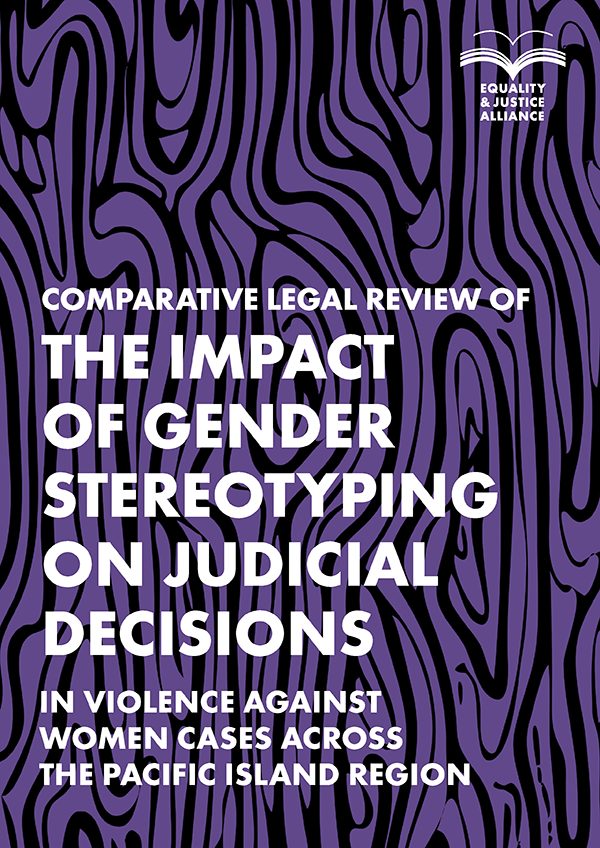
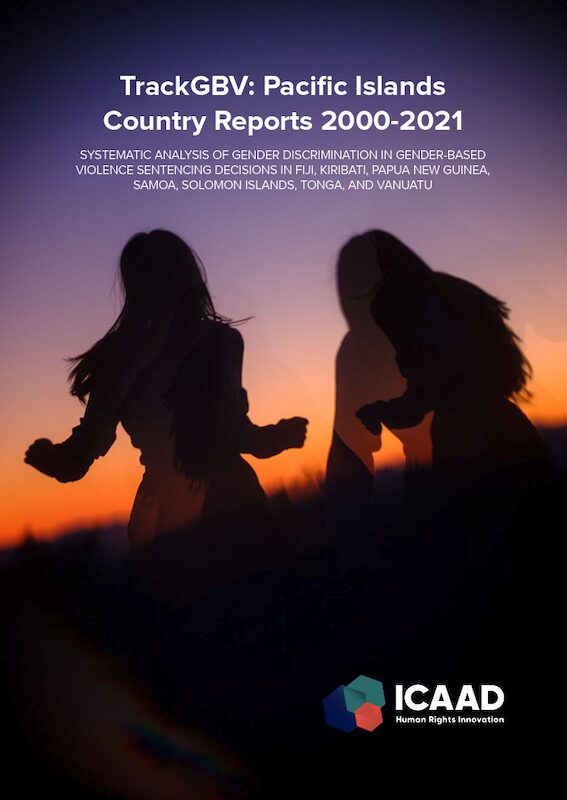
Analysis of sentencing decisions across 12 Pacific Island countries uncovered systemic patterns of judicial bias. This methodology was co-created with Pacific civil society partners like the Fiji Women’s Rights Movement (FWRM).
“The data that emerges from the TrackGBV program will help further our advocacy efforts with the judiciary.”
— Nalini Singh, Executive Director, FWRM
The Impact of Data and Advocacy in the Pacific Island Region and Caribbean
- Data-informed legislative amendments in Solomon Islands.
- Judicial practice directives issued in Fiji based on our recommendations.
- Report cited in a Supreme Court of Tonga judicial decision.
- Domestic violence protection for former spouses upheld in Barbados and across Caribbean Court of Jusice countries.
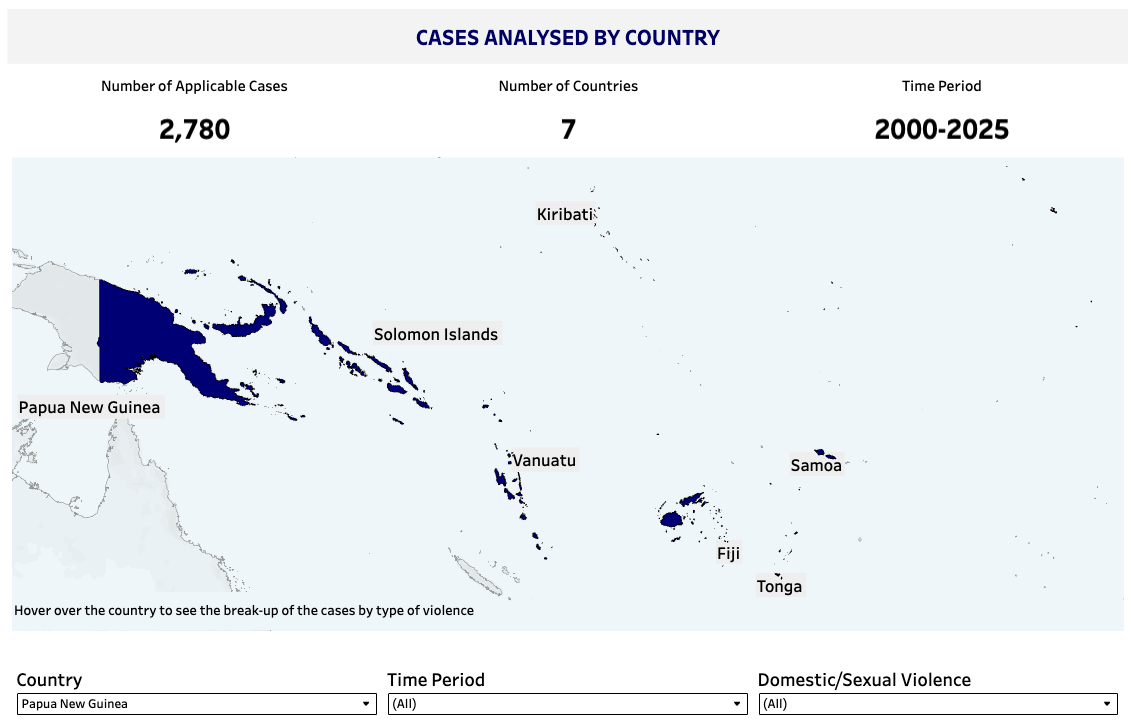
Cases impacted by bias
Sole Breadwinner mitigation

ImpartialAI
Scaling Justice with Technology
Manual review and validation takes an hour per case. Lawyers read each sentencing decision and record 50+ variables. Dashboard is updated annually. Impossible to scale across jurisdictions.
ImpartialAI leverages our gold-standard dataset to analyze a case in seconds. Thousands of cases in parallel. Near real-time monitoring. Patterns visible across jurisdictions. Evidence ready for advocacy, immediately.
Critically, AI is never the final decision-maker.
ImpartialAI
Extraction
• Identifies bias indicators and judicial reasoning patterns from unstructured legal text
Classification
• Tags cases against 50+ variables co-developed with civil society partners over a decade
Citation Tracing
• Links every output to the exact judgment text — explainable and auditable
Human-in-Loop
• AI surfaces; lawyers validate. No final decisions made by the model.
The Evolution of a Decade
From Community Health to Judicial Accountability
2012-14
Asylum Appeals & Strategic Assessments, Pacific Islands
ICAAD successfully litigates two appeals on behalf of Fijian women seeking asylum in the U.S. on the basis of GBV. Evidence submitted reveals high rates of GBV across the Pacific Island region. ICAAD partners with pro bono law firms and local Pacific partners to assess systems gaps and scope interventions.
2014-17
SMS for Justice, India
ICAAD’s earliest justice-tech work started in Assam, India. Local paralegals used basic mobile phones and geo-tagging to identify healthcare gaps affecting pregnant tea garden workers. It proved a principle: communities can drive systems change when they have the right tools.
2015-18
1,000 Case Law Analysis, Data-Driven Reform, 1st Automation Attempt
ICAAD partners with DLA Piper to review 1,000 cases and publishes analysis on gender bias in judicial decision making, presenting the findings at PILON Pacific Regional Attorneys General conference in Solomon Islands. Data-driven advocacy informs legislative reform in Solomon Islands and judicial directives issued by Fiji judiciary. Attempts to automate the manual case law analysis process using machine learning, while also building the TrackGBV database that allows judiciaries to monitor bias in GBV decisions.
2019-24
TrackGBV Dashboard, Scaling to the Caribbean
Completes review of 2,000 sentencing decisions from across the Pacific alongside pro bono law firm partners including Clifford Chance. Receives multi-year grant from the Clifford Chance Foundation supporting TrackGBV. ICAAD partners with UN Women and local partners in the Caribbean to look at judicial bias in gender-based violence cases. Continues engagements with multiple Pacific judiciaries and ministries, and is cited in a Tongan Supreme Court decision.
2025+
ImpartialAI
ICAAD receives grant from the Patrick J. McGovern Foundation to support the automation of TrackGBV case law analysis. With a decade of validated data and advances in technology, ImpartialAI uses LLMs trained on ICAAD’s gold-standard dataset to automate analysis while maintaining accuracy through human-in-the-loop validation.
Regional Initiative
Ending Workplace Sexual Harassment
In many Pacific countries, harassment legislation only protects a narrow slice of the workforce. Women in the private and informal sectors often have no legal recourse.
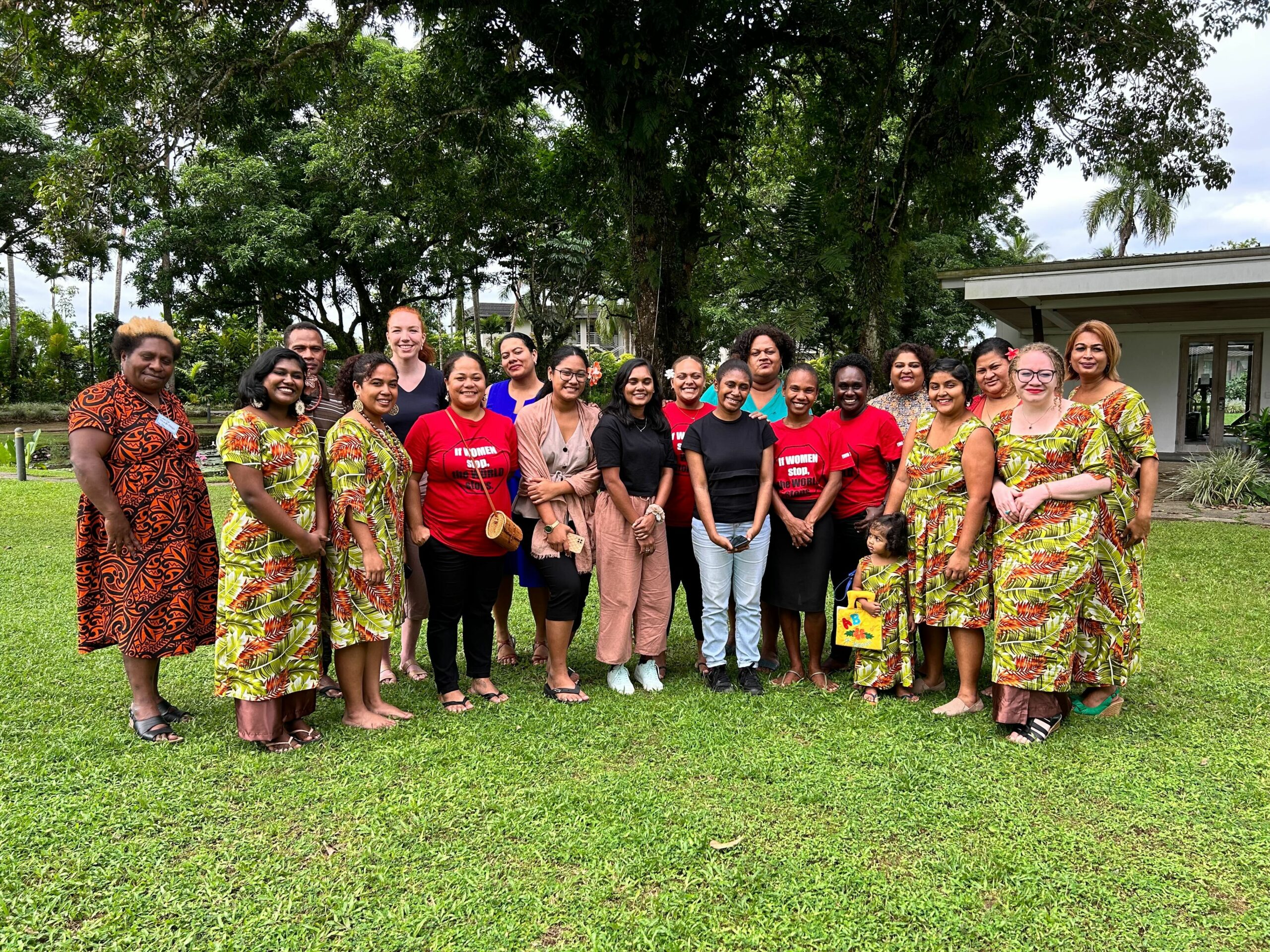
Since 2017, ICAAD has conducted sexual harassment train-the-trainers programs across the Pacific region where participants co-design workplace standards that reflect local contexts. This builds capacity for governments and employers to implement anti-discrimination policies aligned with global best practices.
Case Study
Solomon Islands: Global Advocacy. Local Impact.
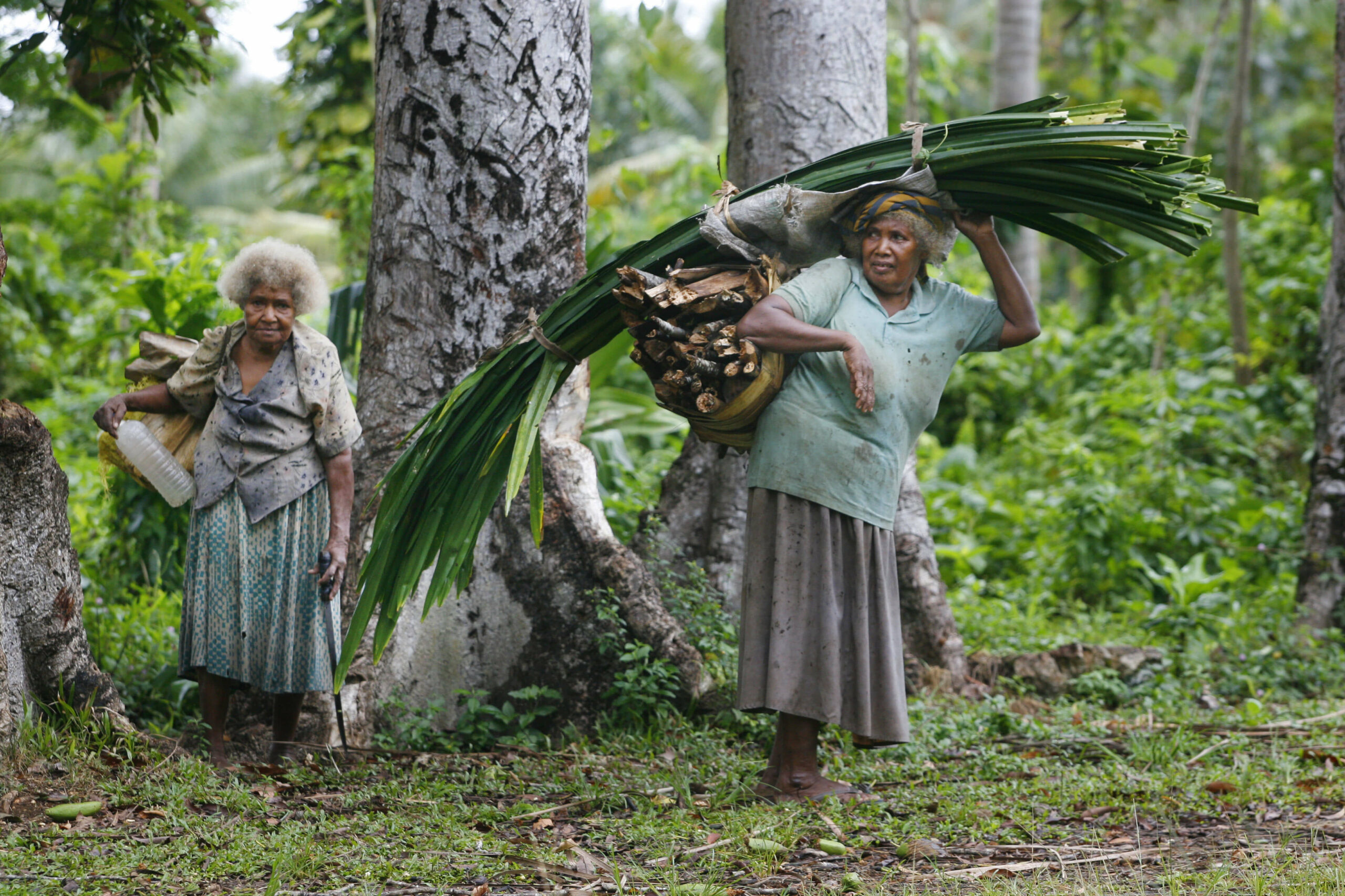
ICAAD engages with local partners to bring their issues to light on the global stage. Alongside our partners in the Solomon Islands, Apunepara Ha’amwa’ora Natural Resources Association (AHRNA) and the Development Services Exchange (DSE) we submitted a joint report outlining two major areas of concern: business and human rights with the extractives industry and access to justice and gender-based violence. ICAAD ‘s analysis of Solomon Islands High Court decisions (2015-2025) revealed gender discrimination in more than half of GBV cases. Customary reconciliation and “sole breadwinner” arguments continue to reduce sentences even in cases involving children.
Partners & Collaborators
Fiji Women’s Rights Movement
Uses methodology for their own analysis
Vanuatu Women’s Crisis Centre
Advocacy and training
Clifford Chance LLP
Pro bono legal research & litigation
MIT GenAI Lab
Independent technical review, ImpartialAI
Manatt
Pro bono legal research
King & Wood Mallesons
Pro bono legal research
Family Support Centre, Solomon Islands
Data-driven local advocacy
Tableau
Data visualization tools
Conduent
Case law analysis platform support
PacLII / University of the South Pacific
Providing open-source judicial decisions
Samoa National Human Rights Inst.
Train the trainers collaboration
DLA Piper
Methodology development partner
Jamaicans for Justice
Strategic advocacy and gap analysis
Steptoe
Pro Bono research and legal analysis
GrenCHAP
Local Grenada LGBTQ+ collaborator
Patrick J. McGovern Foundation
Funding support for ImpartialAI
Pacific Judicial Strengthening Initiative
Regional judicial training & implementation
Clifford Chance Foundation
Funding support for TrackGBV
Get Involved
Judicial bias can be reduced with the evidence and partnerships to drive change.
Help us scale this model globally.
From Our Archive
Technology
SMS For Justice
Community-tech to combat maternal mortality in Assam
community empowerment
Banaban Human Rights Defenders Network
Strengthening democratic systems for the forgotten
Intersection
Climate + Gender
Imagining better futures at the intersection of climate migration and gender justice
capacity building
Stop Sexual Harassment
Combating sexual harassment through education and consensus building