Gender Justice & Ending Violence, Human Rights Advocacy & Education, Publications |
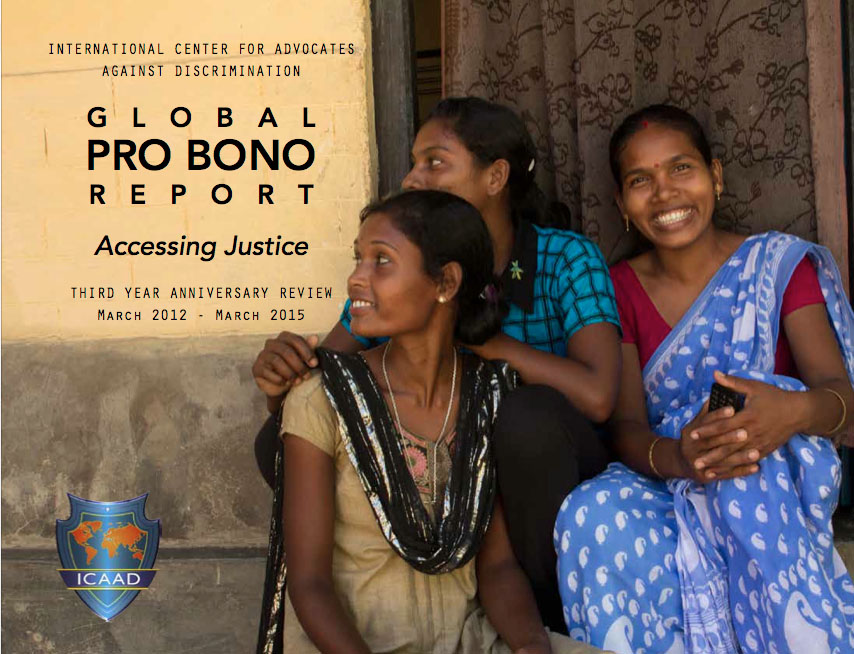
The Global Pro Bono Report shows the breadth and depth of ICAAD’s ability to leverage multidisciplinary partnerships to catalyze social impact; helping women, girls, and minorities to achieve equality. Inside the report you’ll find informative comments...

Gender Justice & Ending Violence, Human Rights Advocacy & Education, Publications |
United Nations Human Rights Council Universal Periodic Review: Sierra Leone Executive Summary Drawing on ICAAD’s research, this submission highlights issues of structural discrimination that impact women and minorities in Sierra Leone. The research examines Sierra...

Gender Justice & Ending Violence, Human Rights Advocacy & Education, Publications |
United Nations Human Rights Council Universal Periodic Review: Solomon Islands Executive Summary Drawing on ICAAD’s research, this submission highlights issues of structural discrimination that impact women and minorities in the Solomon Islands. The research examines...
Gender Justice & Ending Violence, Human Rights Advocacy & Education, Inclusive AI & Justice Tech, Publications |
Nazdeek, PAJHRA and ICAAD announced the release of the report, No Time to Lose: Fighting Maternal and Infant Mortality through Community Reporting. The report brings to light the obstacles that Adivasi women face in obtaining maternal health care in Assam – a state...

Gender Justice & Ending Violence, Human Rights Advocacy & Education, Publications |
Since its last UPR Review, Nauru has taken some concrete steps to combat gender inequality and violence against women. Issues remain in terms of amending legislation to include a specific domestic violence law; better data collection; and ensuring that gender...

Gender Justice & Ending Violence, Human Rights Advocacy & Education, Publications |
The FSM delegation indicated to the United Nations Human Rights Council Working Group on the Universal Periodic Review that FSM was a “very peaceful society and that violence against women and children were rare and isolated”. Since the first UPR review, not enough...