Artivism
Centering artists as architects of just futures
Art does what policy briefs and legal arguments alone cannot. It crosses language barriers. It makes the invisible visible. It creates spaces where communities can grieve, imagine, and demand change on their own terms.
ICAAD’s Artivism Program integrates creative practice with legal advocacy to transform lived experience into forward-looking pathways for accountability, healing, and systemic change.
This is art as evidence. Art as strategy. Art as a form of justice.
Agents of Change
Artivist-in-Residence Program
ICAAD’s Artivist-in-Residence program invites artists whose practice engages with human rights to create new work alongside our legal, design, and advocacy team. The residency is virtual, so artists take part from wherever they are. Over up to a year, residents develop and create their work with direct financial support, human rights training, research assistance, and curatorial input, from early concept through to the exhibition that carries the finished work into galleries, film festivals, and policy spaces. The relationship continues after the residency ends; for example, work created in 2023 and 2024 was shown at UN Headquarters in 2026.
ARTIVISTS-IN-RESIDENCE TO DATE
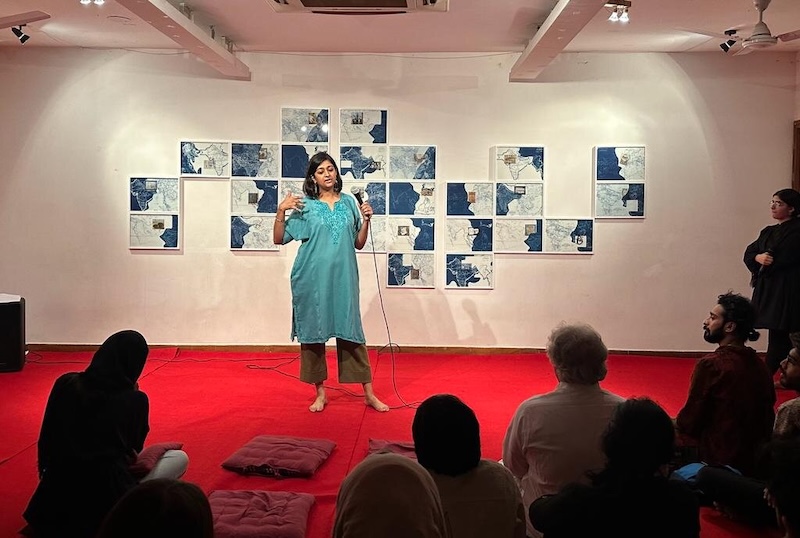
Dilpreet Bhullar
Created A Home in the Constant Flux: A Call to the Verb Memory, photographing objects carried by Afghan, Rohingya, and Tibetan refugees in India to trace how memory moves with displacement.
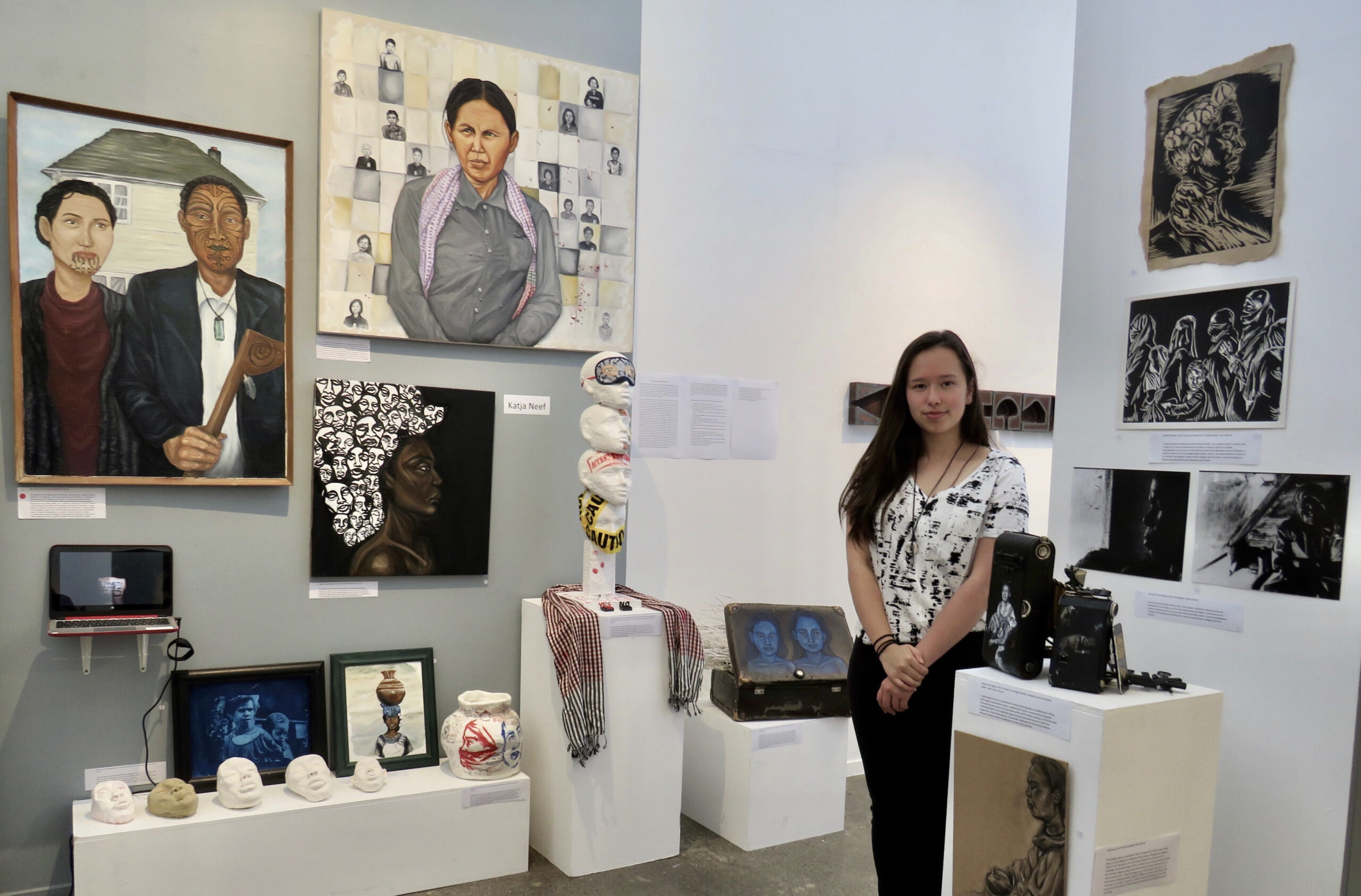
Katja Phutaraksa Neef
Worked with Banaban communities to co-create the Justice for Rabi exhibition, telling the story of their displacement from their island home of Banaba as a result of colonial mining and environmental destruction.
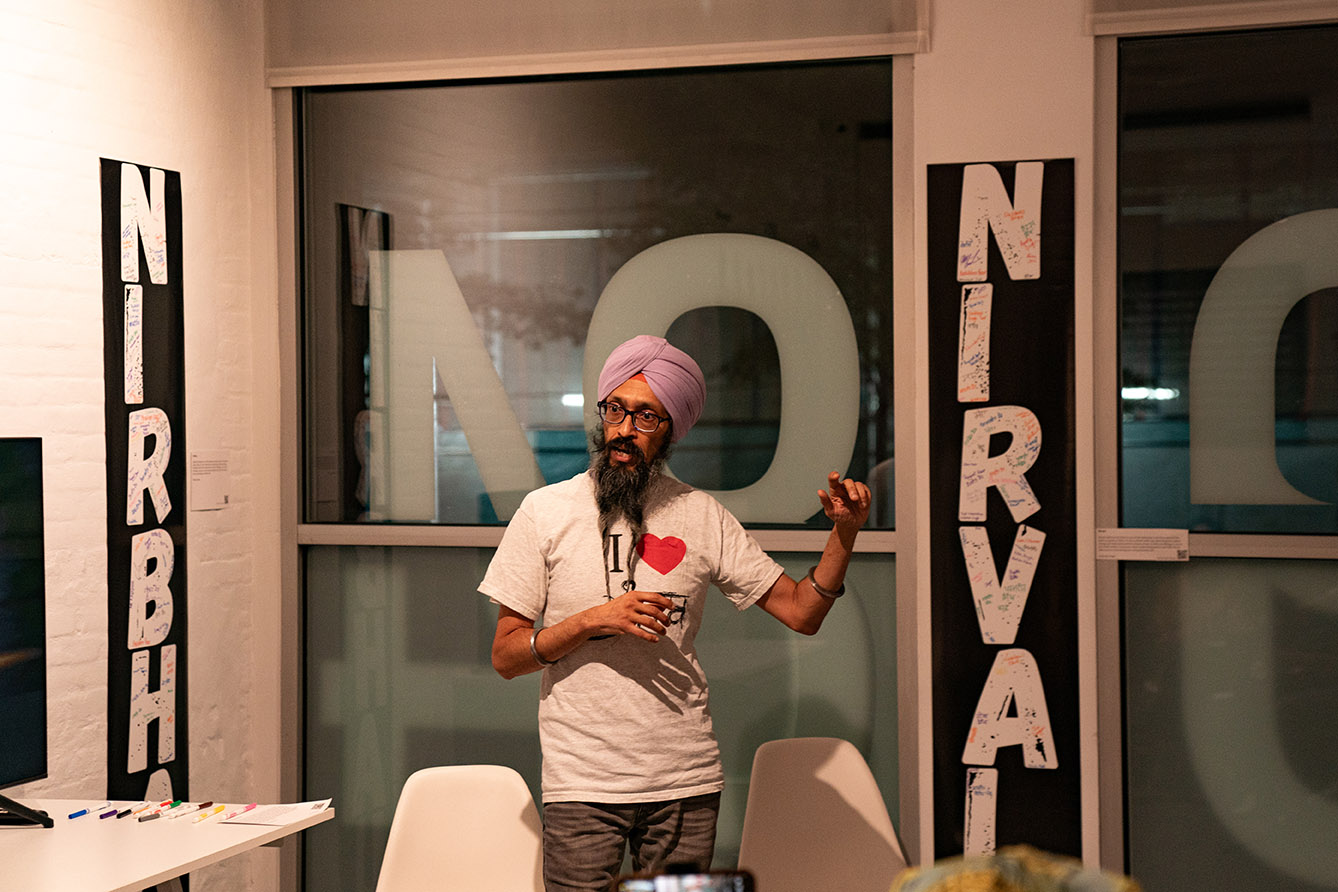
Vishavjit Singh
Created the Webby-winning animated short American Sikh. A survivor of the 1984 Sikh genocide, he uses his Sikh Captain America persona to challenge bigotry and foster dialogue on identity and bias.

Queen
Created re:covering (The Reflection Sessions), a multi-media experience that brings us back to ourselves as advocates to build practices of reflection and self-accountability that make our movements stronger.
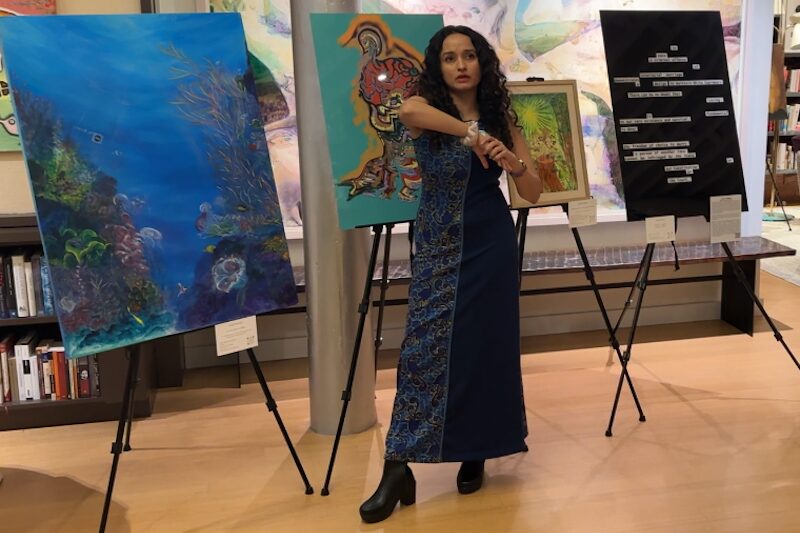
Namita Kulkarni
Created Colonialism and the Climate Crisis, paintings exploring how both are rooted in ever-extractive ways of life, disconnected from any sense of wonder and humility before the infinite workings of the planet.
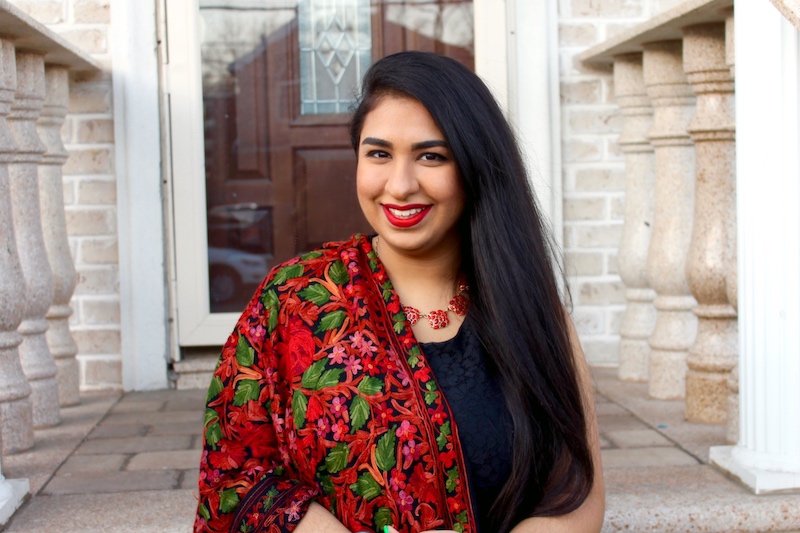 Harbani Kaur Ahuja
Created Dicta, a Webby-honored blackout poetry series drawn from U.S. Supreme Court decisions, exposing the gap between law and justice. It unearths the essence of court decisions in order to illuminate the broader societal context in which they were written.
Artivism as Methodology
Our work embeds creative strategy into the core of global human rights advocacy through three strategic pillars:
Pillar I
Narrative Justice
Correcting the silences of the past. We use art to surface lived experiences, from the spirit of resilience to redacted legal truths, ensuring survivor testimonies become part of the permanent record.
Pillar II
Collective Storytelling
Moving from participation to community ownership. We co-design projects with frontline communities, ensuring art remains a self-determined tool for memory, imagination, and mobilization.
Pillar III
Creative Accountability
Translating art into action. We bridge the gap between creative expression and the halls of power, influencing public and private policymakers in places like the UN, where the Canvas of Change exhibition ran in the Main Lobby Gallery in 2026.

“This exhibit not only highlights what went wrong, but more importantly how advocates can use the story of my people to craft future laws that work.”
Rae Bainteiti, Local Change Maker, Rabi Island
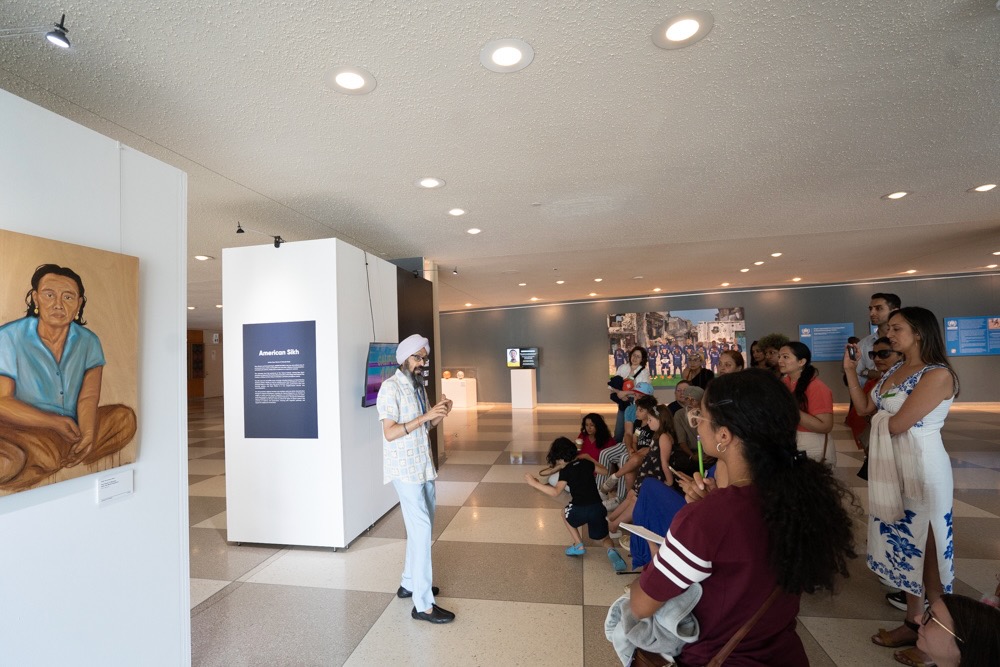
Canvas of Change
Stories of Climate, Displacement, and Resilience gathered work by five ICAAD artivists and two Banaban artists in the Main Lobby Gallery of UN Headquarters, June 5 to July 10, 2026, with endorsement from UN Women. A physical group exhibition, it brought years of residency work into the building where global policy gets made.
Impact
Reach and Outcomes
5,000
estimated visitors engaged with Canvas of Change over 26 days at UN Headquarters, 2026
800+
attendees at Justice for Rabi in Auckland, including New Zealand Members of Parliament, 2023
9
accolades for American Sikh, including a Webby, after its Tribeca Film Festival premiere
500
guests at 40 Years Later in New York, recognized with citations from the NYC Public Advocate, 2024
In May 2026, Fiji amended its citizenship law to simplify naturalization and waive application fees for Banabans living in Fiji for the first five years. The change followed years of advocacy led by the Banaban Human Rights Defenders Network, supported by ICAAD and Clifford Chance, that brought together the Justice for Rabi exhibition, the Banaban Citizenship Handbook, and joint UPR submissions.

Academy
Sharpening Advocacy Skills
We integrate artivism as a core pedagogical tool in our Advocacy Academy, helping practitioners use creative storytelling to build empathy and unleash the innovative thinking required for systems change.
Art Changes How We See.
Seeing Changes How We Act.
ICAAD’s Artivism Program creates spaces where art becomes evidence and audiences become advocates.
From Our Archive
Exhibition
Art & Discrimination
ICAAD’s first artivism exhibition, New York, 2012.
Legal Resource
Banaban Citizenship Handbook
Produced with Clifford Chance and the Banaban Human Rights Defenders Network.
Merchandise
ARTivism Shop
All proceeds support our human rights programs.
Short Film
American Sikh
Webby-winning animated short by Vishavjit Singh, co-executive produced by ICAAD.