
Reviewing GBV sentencing data and adding a new layer of judicial reasoning analysis
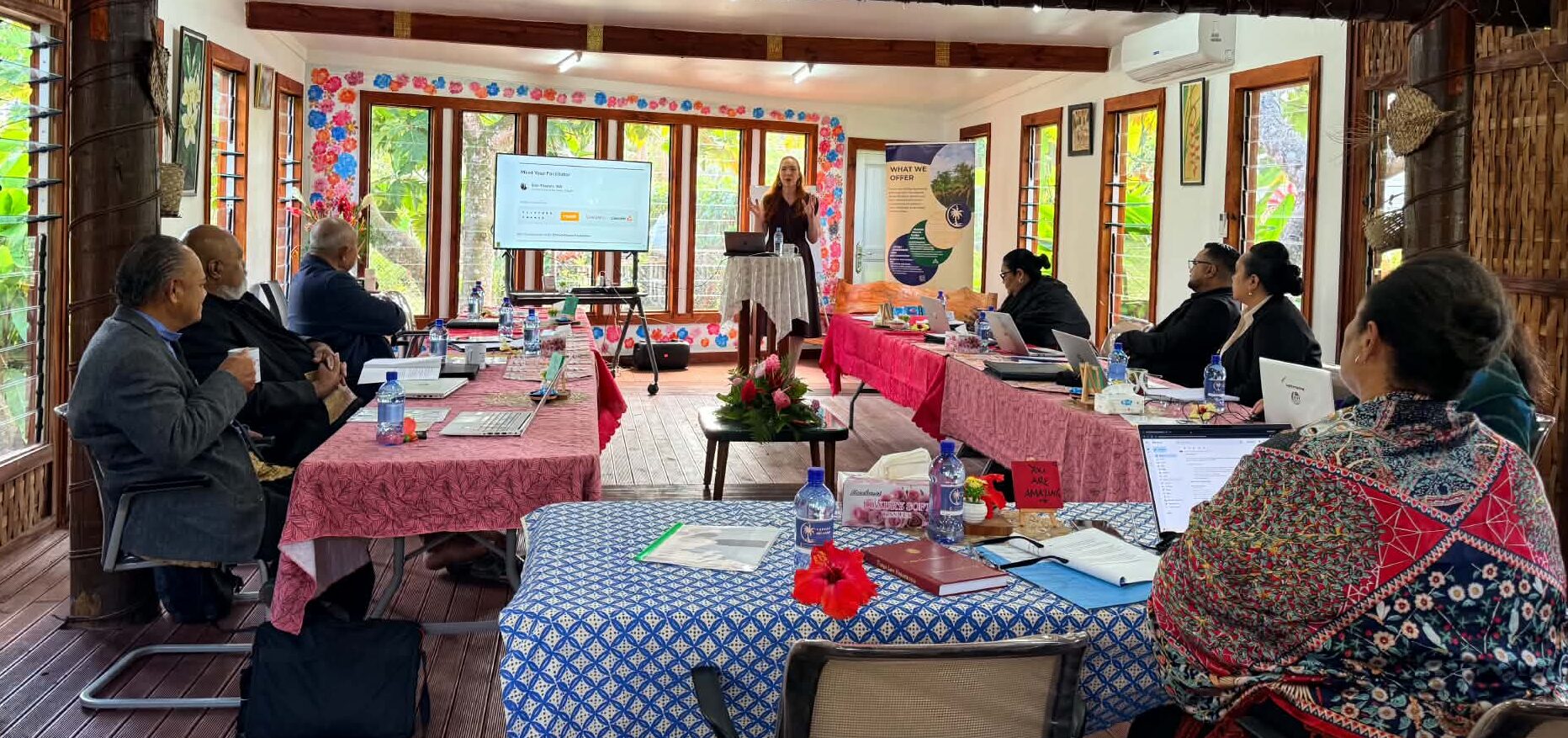
TrackGBV analyses gender-based violence sentencing decisions to track bias and discrimination in the courts, and it relies on having access to that case law. In the Magistrates’ Court in Tonga, most sentencing decisions for civil, criminal, and family matters are written in the Tongan language. While TrackGBV has 83 cases from Tonga from 2000-2025, they are all from the Supreme Court and Court of Appeals. Notably, most domestic violence cases are heard at the Magistrate Court level.
In August 2026, the Chief Magistrate invited ICAAD, through our partnership with Families Free of Violence (FFOV), to lead two days of Tonga’s Annual Magistrates’ Conference. With nearly all of Tonga’s magistracy in the room, we explored how the TrackGBV data and methodology could support their decision making in the moment, even when there’s no written judgement.
The Journey to Court
We started the training by building a shared understanding of gender and gender-based violence in Tonga and mapped the paths survivors take to court. Of women in Tonga who have experienced violence, 71% never sought help or told anyone, according to the 2024 Tonga Multiple Indicator Cluster Survey. The journey mapping activity brought the room into conversation about what’s really at stake for survivors in accessing justice.
Naming Contentious Factors
The Magistrates worked through the TrackGBV methodology and reviewed the latest data from High Court and Court of Appeal decisions to understand where contentious factors surface and their impact on sentencing outcomes. In sentencing decisions from 2014 to 2025, nearly one in three saw contentious factors being used to justify sentence reductions. Contentious factors include gender stereotypes, customary practices, and other factors that unjustly privilege the interests of perpetrators over those of survivors.
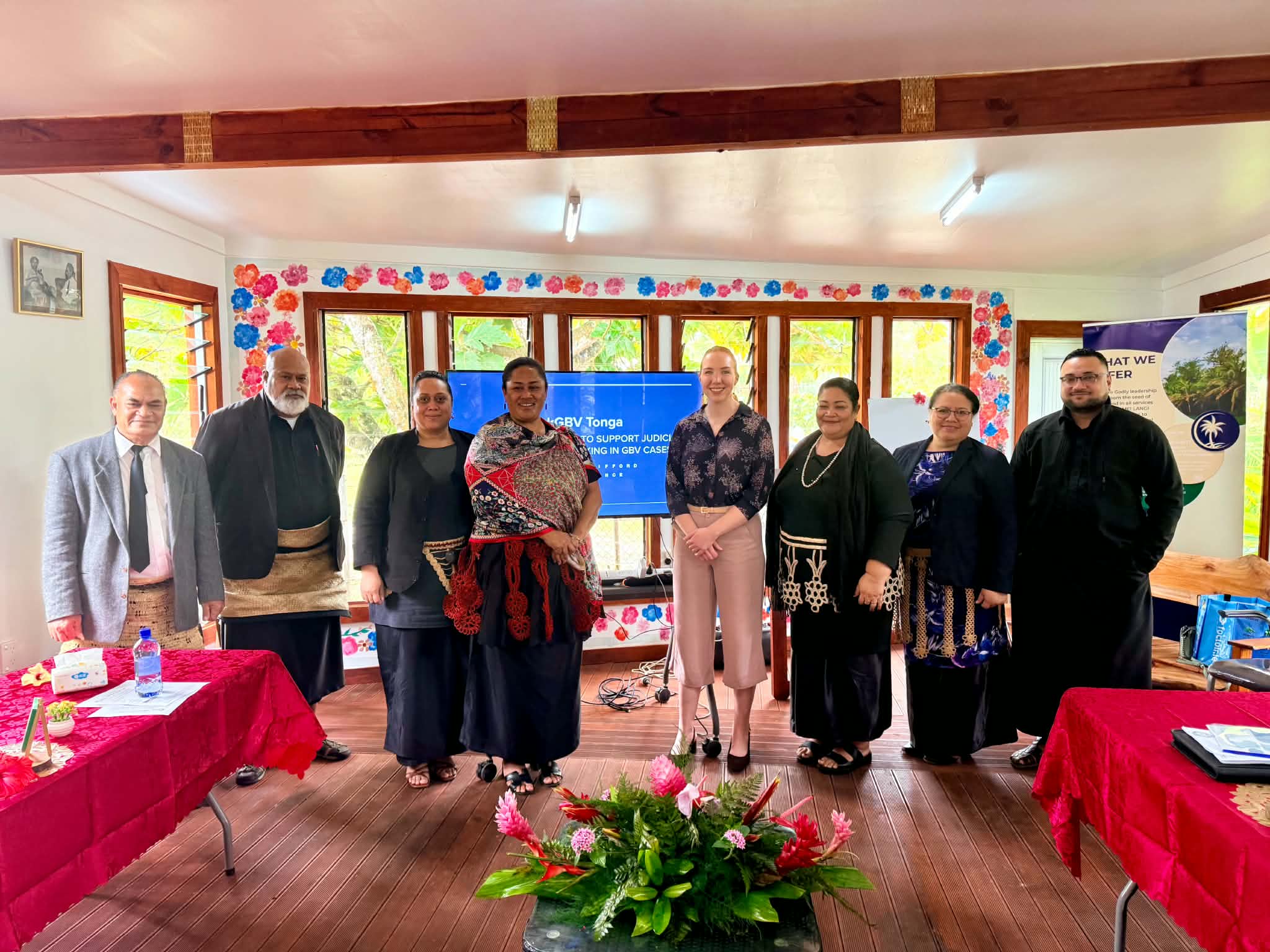
Senior Magistrate Ane Mailangi shared: “Putting a name to contentious factors was really helpful. It’s made me think back to my decisions and where they might have come up. This training has really offered me a toolkit to interpret submissions made to me in court. As Magistrates, we often make decisions on the spot, so even if I can’t use the TrackGBV Dashboard, this learning is part of my toolkit in how I approach sentencing.”
A Totally New Lens
The training culminated in an opportunity for the Magistrates to review cases themselves. Building on the TrackGBV methodology, they had a chance to add a layer of analysis, looking in a more granular way at judicial reasoning. This layer will be integrated into ImpartialAI, the next iteration of TrackGBV. The methodology gets more specific about the language judges use and how it corresponds to sentence proportionality.
For example, the contentious factors category of “gender stereotypes” consists of many different types of language. The judicial sentiment analysis allows us to get more specific about dynamics like blaming victim conduct or contribution to violence or technical minimisation of harm through myths like “she didn’t resist”, for example. The methodology also tracks victim and harm centered language like emphasis on deterrence in sentencing and describing what the offending cost the victim.
In addition to the TrackGBV methodology, the added layer of the judicial reasoning analysis was particularly valuable for how the Magistrates think about their own decision making.
Senior Magistrate Ane Mailangi added: “The judicial reasoning analysis was especially helpful. We reviewed judgements with a totally new lens. I won’t be able to review judgements without thinking about judicial reasoning and contentious factors. I can’t unsee them, and this training will shape how I go forward in my decisions and even how I see media about gender-based violence.”
What’s Next
This training offered Magistrates a framework for interrogating gender bias and discrimination in their own decision making. Even without the sentencing decisions from the Magistrates’ Court, the TrackGBV data and methodology provided a critical lens to think through sentencing logic against biased beliefs about gender-based violence.
FFOV is hoping to do more work with the Magistrates’ Court in the next phase of their work. Part of this may involve supporting the translation of domestic violence cases which would facilitate even more insights from the TrackGBV analysis.
As ICAAD continues to develop ImpartialAI, the application of the judicial reasoning analysis with Tonga’s Magistrates made the use case for this more granular analysis that much clearer. The specificity of the reasoning analysis mapped against proportionality is a tool that can support Magistrates, even if it only covers higher level court decisions.