
Equipping Vanuatu’s Human Rights Defenders
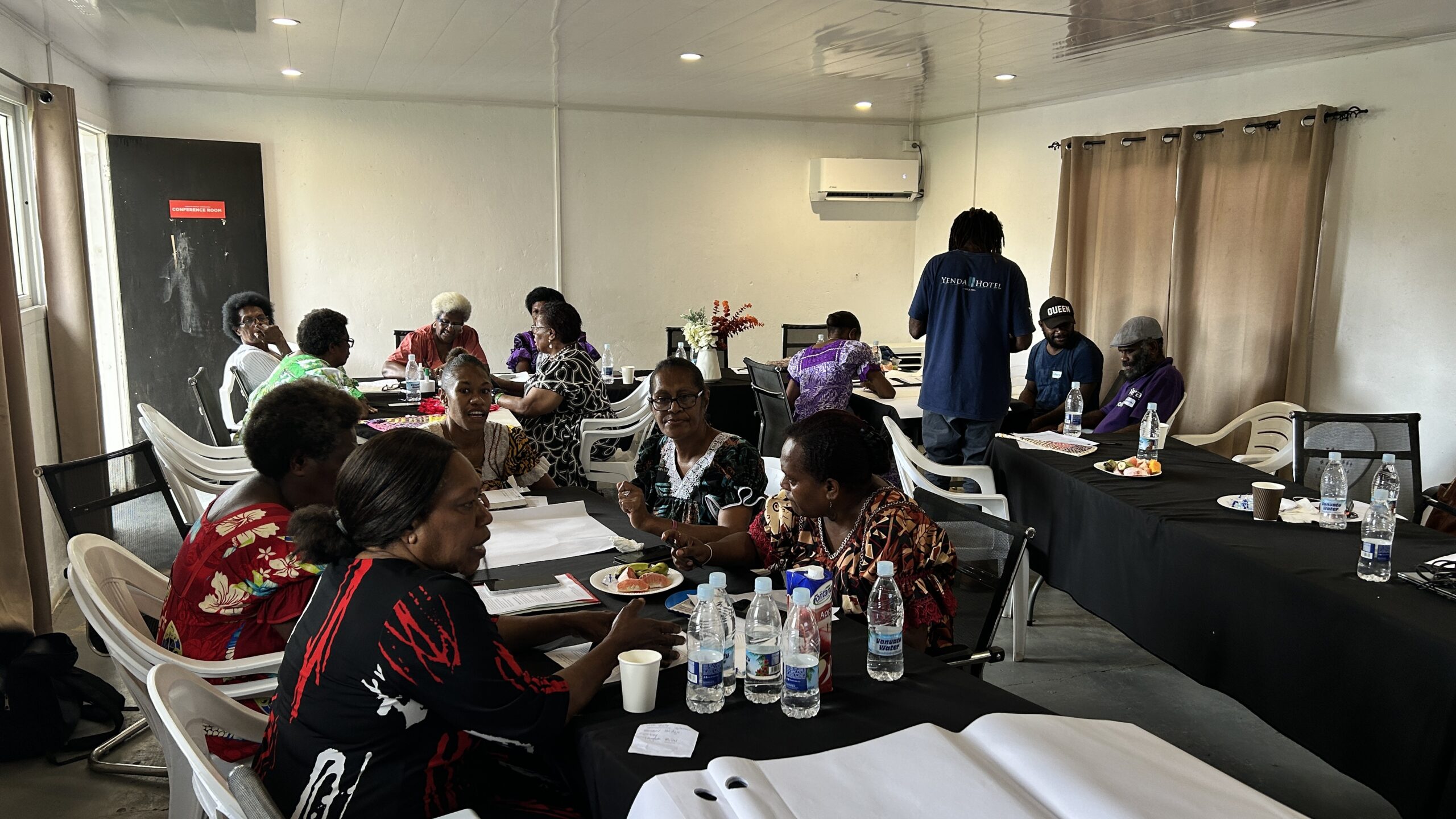
Group work at the Human Rights Defenders Training in Port Vila, April 2026.
Fifteen human rights defenders joined a three-day workshop in Port Vila, Vanuatu, 13-15 April, co-organised with Anne Pakoa, Founder of the Vanuatu Human Rights Coalition, and Jenny Ligo, Founder of Women Against Crime and Corruption (WACC). Anne and Jenny connected with ICAAD at the UN Pacific Forum on Business and Human Rights in Suva last year. They wanted to engage ICAAD to support their movement building and strategy, and our conversations leading up to the workshop shaped the agenda.
Day one’s discussions ranged from climate justice to gender-based violence, but a single theme ran through all of it. Vanuatu has strong human rights commitments on paper, but the gap between those commitments and everyday reality is growing. Day two involved site visits to areas with major human rights concerns, and day three focused on documenting the human rights violations witnessed at the site visits and efforts towards a Paris Principles-compliant NHRI in Vanuatu.
Over half of the participants work directly on women’s rights issues. ICAAD’s TrackGBV program, which tracks gender bias in the sentencing of gender-based violence cases across the Pacific, was a strong reference point as a way to build an evidence base to document dutybearers’ shortcomings in upholding their human rights obligations as well as the general lack of human rights competency in government.
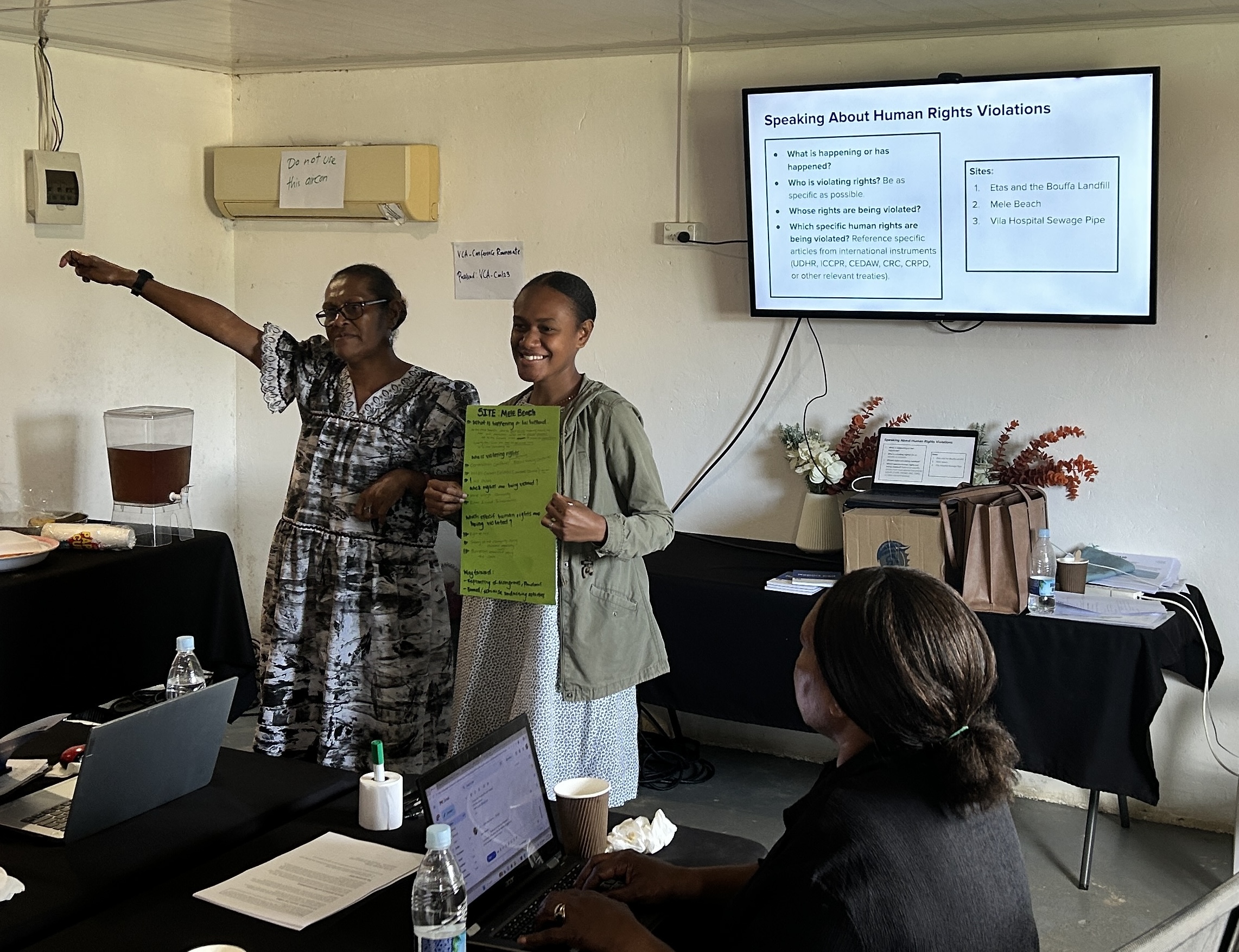
Human Rights Defenders in Vanuatu practicing how to document human rights violations.
Day two was shaped by participant-led site visits. We covered the Bouffa Landfill at Etas, where over 5,000 people are living, communities downstream from the Tusker Beer Factory following the Environment Dept’s contaminated water quality findings that week, Mele Beach which has seen sea level rise compounded by sand mining, and the Vila Central Hospital waste pipe which dumps directly into the Erakor Lagoon. Participants learned how to document conditions and human rights violations across all four sites. The outcomes statement from those visits were then shared with the UN Special Rapporteur on climate change and human rights.
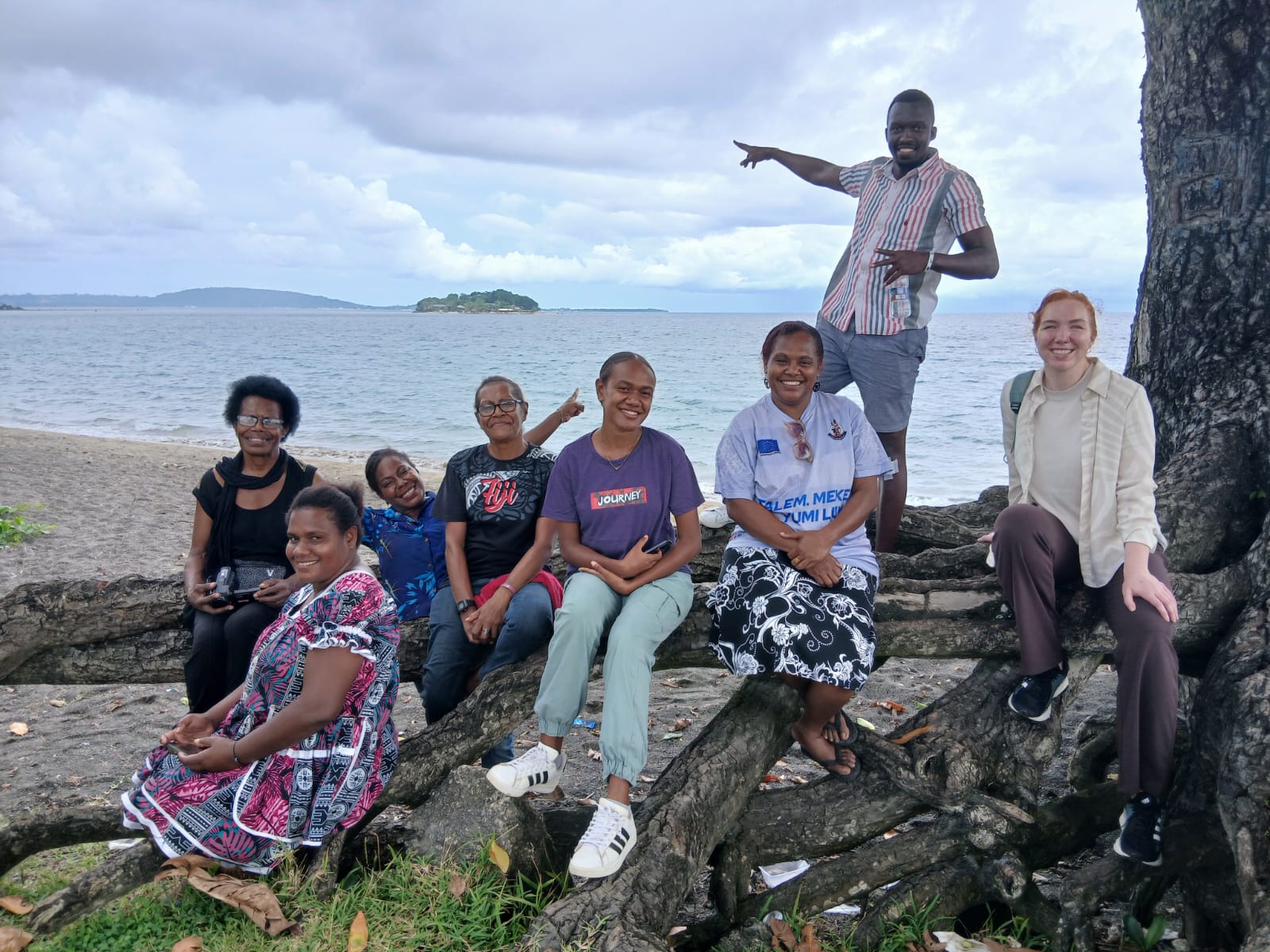
Workshop participants visiting Mele Beach where sand mining and the climate crisis has exacerbated land erosion and sea level rise.
Day three was shaped by the priorities set on day one and two, and participants wanted sessions on the Paris Principles for NHRIs and power mapping for advocacy strategy. Day three concluded with strategic planning among participants about how to carry the work forward including the practical and the relational (i.e. how to practice solidarity in the movement).
Workshop co-organiser Jenny Ligo spoke to what participants identified as one of the most important next steps: legislation that formally recognises and protects human rights defenders. Countries across the world have developed national frameworks that define who qualifies as a defender, set out specific protections, and assign obligations to authorities. Vanuatu does not yet have one, and that means a less safe place for human rights defenders to do their work.
The human rights defenders will continue to advocate for action on these issues as well as bring structural change to prevent violations like this in the first place. This includes Vanuatu establishing a Paris Principles-compliant national human rights institution, following commitments made through the Universal Periodic Review process. The Human Rights Committee within the Ministry of Justice is a foundation, but an independent institution is needed to hold the line on obligations without political pressure.
Workshop co-organiser, Anne Pakoa shared that “many participants were doing work they didn’t realise was human rights. The tears at the certificate ceremony were joy, appreciation, and hope. Many of them do this work unpaid and having a safe space to learn and be together was so empowering.” She explained that the fact participants came back for every day of the training was evidence of how relevant it was. “It was clearly valuable and will only grow from here.”
There is strong appetite from participants and co-organisers to take this training to other islands in Vanuatu, so ICAAD, the Vanuatu Human Rights Coalition, Women Against Crime and Corruption, and Vanuatu Young Women for Change are pursuing funding to do so.
Participant Feedback gathered using Mentimeter at the conclusion of day 3.
- “Before this workshop I thought I couldn’t make a difference….now I know my voice matters in protecting others.”
- “It is important to really strategize about our advocacy as defenders. People work in silos but it is important to stand in solidarity and work with others.”
- “This workshop gave me an opportunity to collaborate with others and collectively plan developments moving forward here as a team of human rights defenders. This is a huge success!”
- “The workshop gave me more understanding beyond what I have expected to learn about different areas in human rights.”
- “As a young advocate, this workshop has improved my knowledge and understanding of different strategies to help solve issues in Vanuatu.”
- “What did the workshop give you that you don’t expect? This workshop gave me more confidence on how to tackle any issue arises with my people in the community and how to stand in solidarity with the group.”
- “Vanuatu needs more workshops like this.”