Regional training strengthens advocates working to implement ILO Convention 190
In February 2025, advocates from five Pacific Island countries met in Nadi for a week-long training on workplace sexual harassment. They came from ministries, trade unions, women’s rights groups, and community organisations. Some had legal backgrounds. Others had spent years doing workplace advocacy, and some were new to the issue.
They were brought together by the shared goal of ending sexual harassment in the world of work.The training, hosted by the Fiji Women’s Rights Movement (FWRM) with support from Pacific Women Lead at the Pacific Community (SPC), wasn’t a one-off event. It was part of a longer strategy to strengthen regional capacity, deepen cross-border relationships, and build the skills needed to implement meaningful protections on the ground.
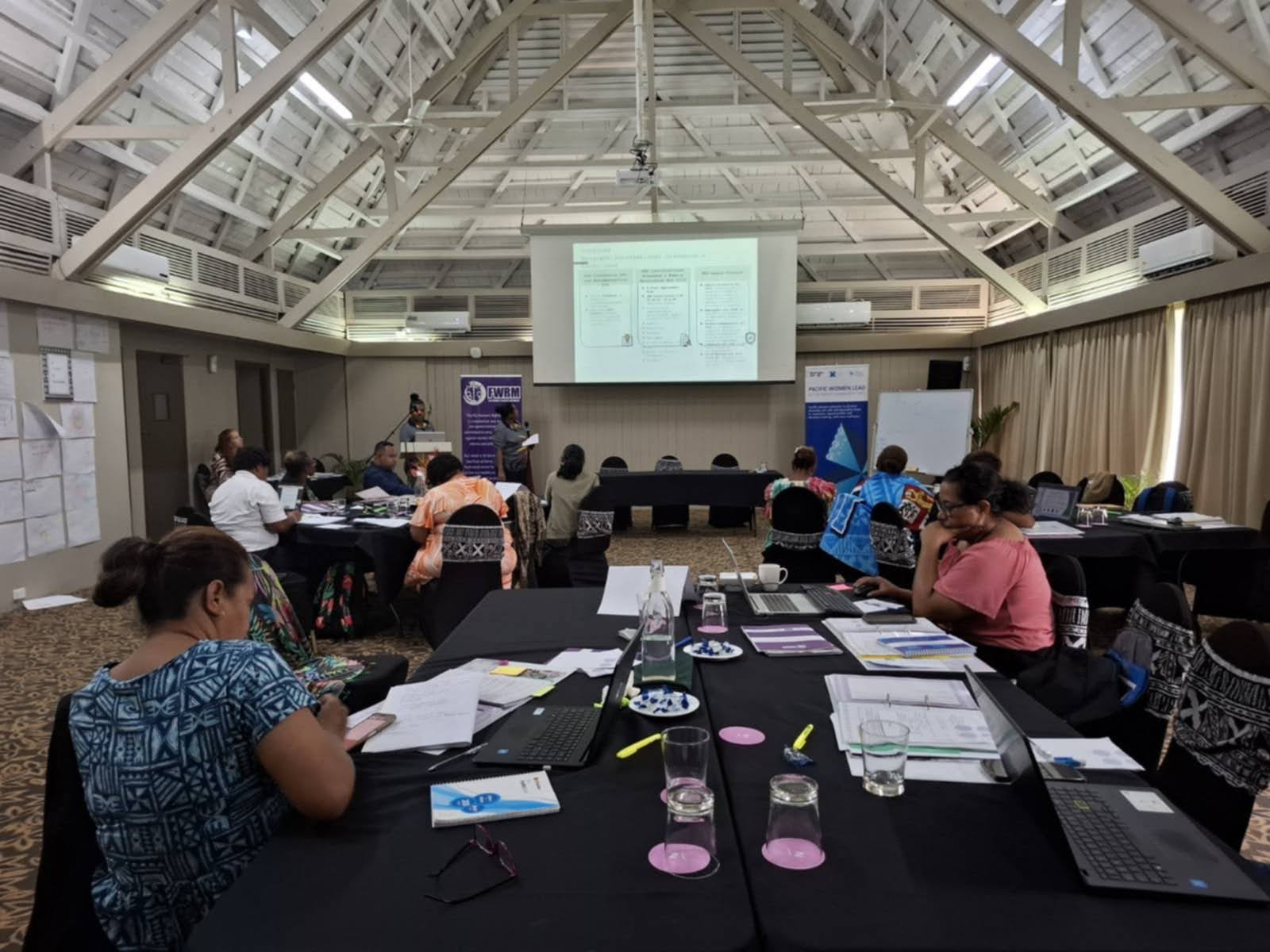
Representatives of various organisations from five Pacific island countries participated in a training on workplace sexual harassment in Nadi. Image supplied by the Fiji Women’s Rights Movement.
Legal wins don’t enforce themselves
FWRM has been working on workplace protections since the early 1990s. Their advocacy helped shape Fiji’s Employment Relations Act 2007, which introduced legal obligations for employers to respond to sexual harassment. We know that around the world, women’s movements catalyse transformative change, and the work often continues when implementing and enforcing new policy.
A 2016 study on the prevalence of sexual harassment in Fiji’s workplaces showed persistent gaps in reporting and prevention. FWRM responded by seeking new partnerships to strengthen implementation. That led to the 2017 launch of the first Train the Trainers workshop, co-developed with ICAAD and supported pro bono by international law firm Manatt, Phelps & Phillips. Over three days, key stakeholders from the Ministry of Employment, the Human Rights Commission, and frontline service providers examined different forms of harassment, the role of retaliation, and how to write effective workplace policies. This training marked a shift. It translated research into tools and strategy, making legal obligations more understandable and actionable.
Since then, FWRM has continued refining and expanding the program. Over 50 individuals have now been trained through ToT workshops. FWRM has delivered over 21 workplace sexual harassment trainings across Fiji since 2021 alone.
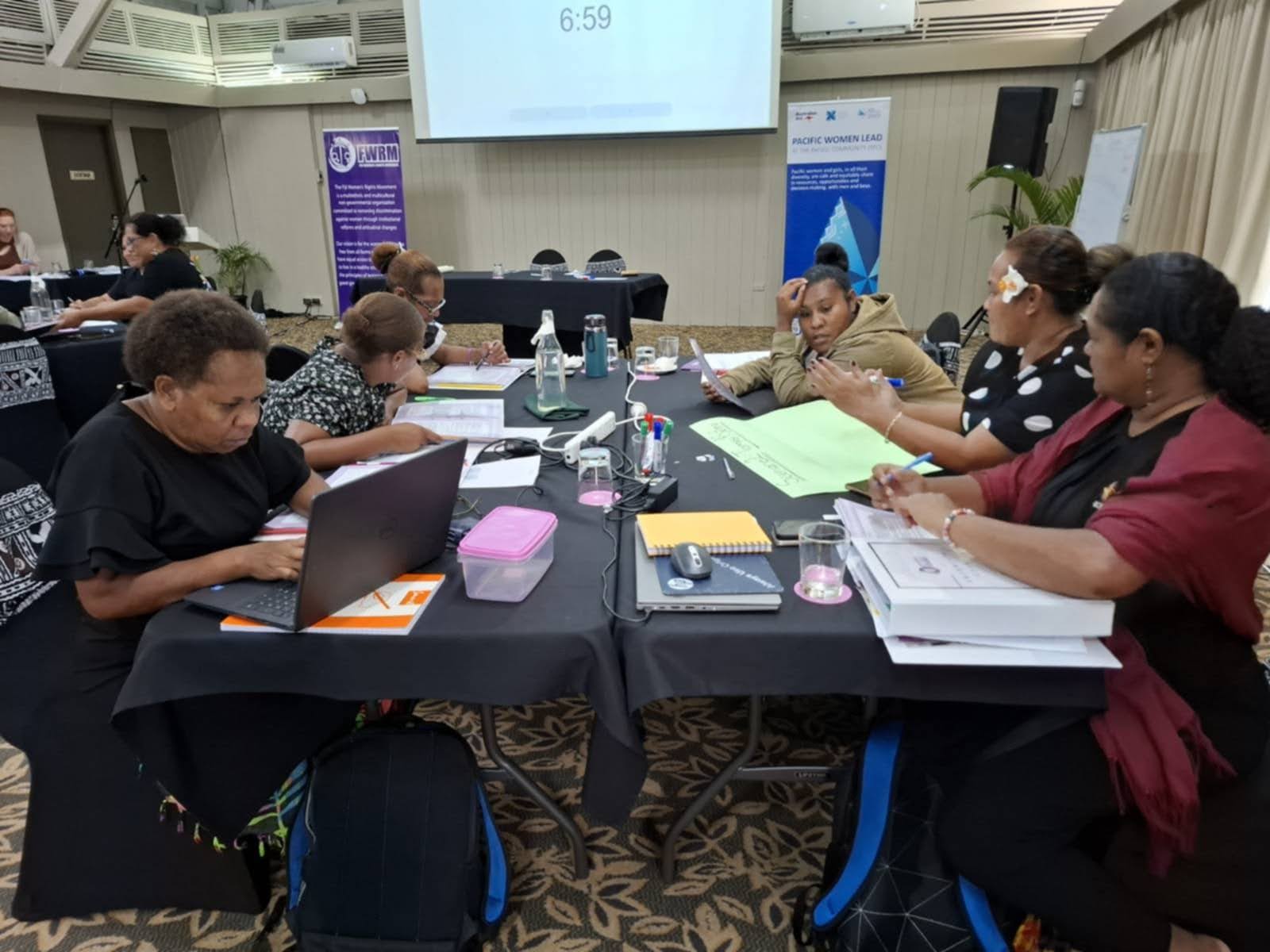
FWRM has trained over 50 individuals as Trainers of Trainers and over 21 workplace sexual harassment have been conducted across Fiji since 2021. Image supplied by the Fiji Women’s Rights Movement.
Why C190 matters
The International Labour Organisation (ILO) Convention 190 (C190) was central to the February 2025 training. It is the first global treaty to recognise the right to a world of work free from violence and harassment, including gender-based harassment. What makes C190 especially powerful is its scope. It covers formal and informal workers, including domestic workers, interns, and people in precarious jobs who are often excluded from labour protections.
Fiji ratified C190 in 2020, becoming the first Pacific Island country to do so. Since then, Papua New Guinea, Samoa, and Australia have followed. In response to this regional momentum, the call is on more governments across the Pacific to ratify and implement C190, and to make sure the commitments are backed by resourcing, enforcement, and real shifts in workplace culture.
The February training gave participants practical tools to work towards that. From drafting model policies to identifying legal gaps and navigating complaints processes. It also opened space for reflection on what meaningful implementation could look like in each country’s specific context.
When data moves people
One session in the February workshop focused on ICAAD’s TrackGBV Dashboard, a tool that visualises judicial data on gender-based violence. For many, it changed how they saw the justice system.
“I’ve asked my boss if I could go listen in to cases in the courts and see what goes on. I never actually went, but after seeing the TrackGBV Dashboard, I realised that I wouldn’t have been able to interpret what was happening in the courts without a framework. The Dashboard really helped me understand what’s going on in the courts, and I want our advocacy to get into this area.”
— Olive Imatana, Senior Project Officer, PNG Business Coalition for Women
“This is the first time looking at cases and understanding legal frameworks. It has opened my eyes to look deeper into legislation to look at the gaps for our countries. When people talk about gaps, this is what they’re talking about.”
— Rothina, Director, Vanuatu Department of Women’s Affairs
Data, when paired with accessible tools and collective interpretation, becomes a strategic lever.
A web of solidarity
The diversity of participants in the February workshop reflected the strength of this growing movement. From femLINKpacific in Fiji to Sista in Vanuatu, Fatu Lei in Tuvalu, and the Solomon Islands National Teachers Association, the network spans women’s rights organisations, trade unions, and advocacy coalitions.
FWRM has held the centre of this web, convening feminist learning spaces, refining the ToT program, and sustaining the campaign for regional momentum to advance policy and implementation. ICAAD has been honoured to walk alongside, offering legal research, data tools, and strategic inputs where useful, always deferring to the leadership of those driving change from within.
This is what long-term movement-building looks like: layered, coordinated, iterative, and responsive to shifting power.
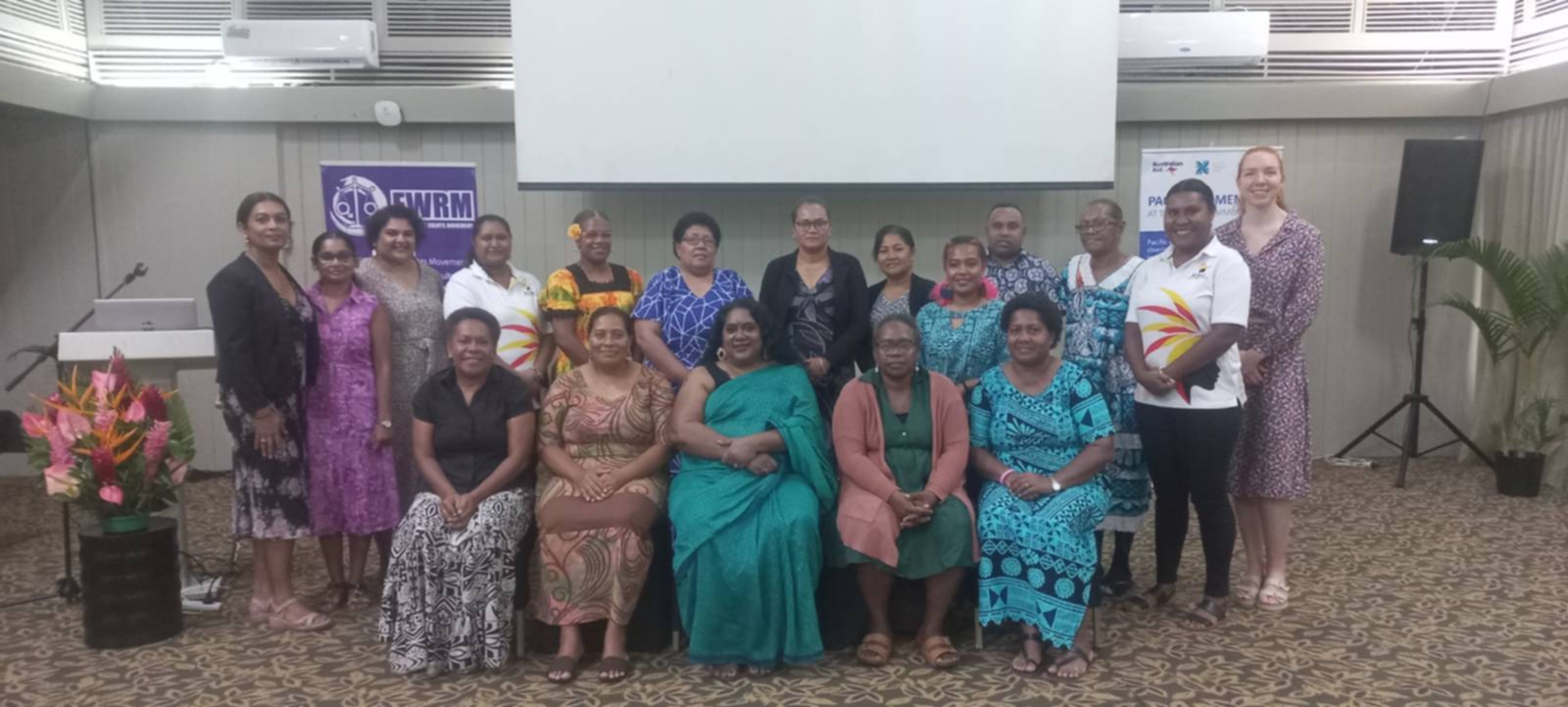
In early 2025, representatives of various organisations from five Pacific island countries met for a week-long training on workplace sexual harassment in Nadi. Image supplied by the Fiji Women’s Rights Movement.
What comes next
The next challenge is implementation. Ratifying C190 is critical, but its impact will depend on whether it leads to concrete changes. When laws are in place, and workplaces develop sound policies, all workers are safer. The call is coming from the movement.
FWRM will continue delivering workshops, mentoring trainers, and supporting national reforms. Across the region, advocates are working to hold institutions accountable and push governments to act. At ICAAD, we’ll keep contributing tools, frameworks, and support while learning alongside our movement partners.