

A new report shows that legal protections alone cannot deliver justice when the biases and inequalities that underpin gender-based violence remain unchallenged.
Gender-based violence (GBV) is a pervasive issue across the Caribbean. Barbados is a regional leader in the rule of law, having introduced legal reforms in the last few years that strengthen protections for survivors of GBV who seek justice through the courts. Yet, the promise of the law is not always realized in practice. Victims seeking justice face significant barriers to safety and meaningful accountability while navigating the legal system.
ICAAD has published a new strategic assessment that examines how GBV cases are experienced and addressed within Barbados’ justice system. The report traces the journey GBV survivors endure from when they experience violence, through reporting their case, to court proceedings. The analysis looks beyond the letter of the law to examine how legal frameworks are interpreted and applied in various areas of the justice system, and highlights how deeply entrenched gender biases undermine survivors’ credibility and compromise the fairness of decisions made throughout the justice process.
The research brings together existing research and insights from key stakeholders across justice, health, and civil society. In doing so, it maps the services and support available to GBV survivors, identifies where institutional responses fall short, and highlights gaps in protection and accountability. The robust assessment draws on:
- A review of past and current policies and legislation.
- Survey in collaboration with the University of the West Indies’ Women and Development Unit (WAND)
- Interviews conducted by ICAAD with justice-sector and legal professionals, service providers, and other key stakeholders.
- An analysis of case law and judicial decisions in GBV cases.
Ending gender-based violence requires, first and foremost, a fundamental shift in attitudes about gender. This calls for raising awareness of harmful gender biases and challenging them wherever they appear: between people, in written laws, in judicial decision-making, and especially in the treatment of survivors. This report seeks to contribute to that shift by making these biases visible and identifying concrete opportunities to advance more equitable outcomes for GBV survivors.
The report concludes with evidence-based, context specific recommendations for stakeholders across the justice system and social development sector, particularly legal practitioners, policymakers, researchers, and development partners. Implementing these recommendations will not only improve outcomes for survivors, but at the core, foster healthier relationships between families and will enable safer communities across Barbados.
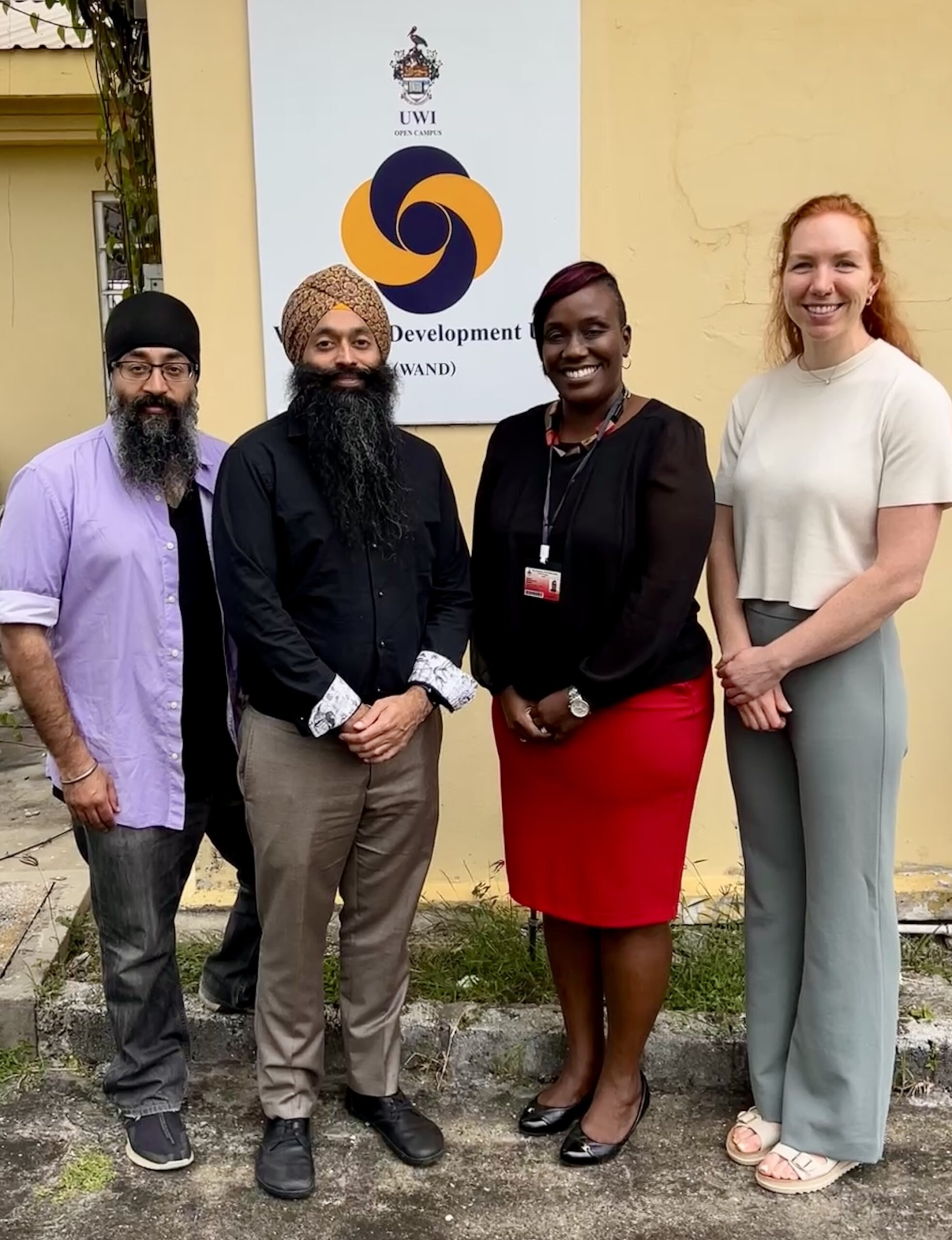
From left to right: Hansdeep Singh (ICAAD), Jaspreet Singh (ICAAD), Mrs. Colleen Robinson-Hunte, Head (Ag) WAND, Erin Thomas (ICAAD).