
Building power and women’s leadership from the ground up
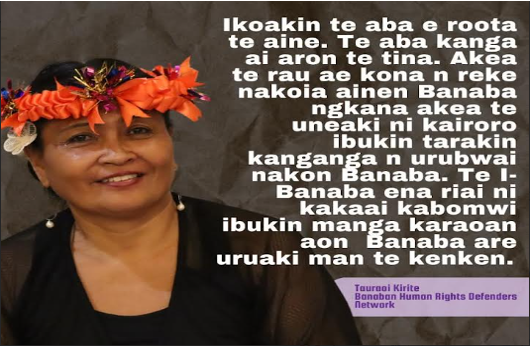
“When the land is harmed, women are often among the first and most deeply affected.The land is often regarded as a mother, nurturing and sustaining the lives of her people. For Banaban women, there can be no true peace without the continued struggle for the restoration and reparation of their land.The Banaban people should pursue compensation for the restoration and rehabilitation of Banaba following the extensive damage caused by phosphate mining.” Tauraoi Kirite, Banaban Human Rights Defenders Network
A few months after completing three Advocacy Essentials courses, Tauraoi Kirite is welcoming more than 100 inaugural members of Rabi Women Economic Empowerment (RWEE). As an Assistant Coordinator of the Banaban Human Rights Defenders Network, she had always understood women’s power in her community. She could also map exactly where there were barriers.
The Banaban Human Rights Defenders Network (BHRDN) is a community-based organisation on Rabi Island, Fiji, with members on Rabi Island, Fiji and co-partners in Kiribati. The Banaban people were displaced from their ancestral homeland of Banaba (Ocean Island) to Rabi in 1945, when the British Phosphate Commission removed them to continue phosphate extraction. The Banabans were promised self-governance through a semi-autonomous Rabi Council of Leaders, but when the Fijian government dissolved the Council in 2013, an unelected interim Administrator took control. Without elections, development stalled, human rights protections eroded, and community members who criticised the Administrator faced retaliation.
The displacement also disrupted cultural practices and created conditions for patriarchy to entrench itself. Village committees now consist almost entirely of men, and all recognised elders are men. Women have been working to reclaim leadership roles since 1945.
In 2025, Tauraoi completed Foundations: re:flexing, Frames: Human Rights for Impact, and Tools: Advocacy Strategy through the Advocacy Essentials Certificate program. In Foundations: re:flexing, she applied power and systems of oppression frameworks directly to what she was seeing on Rabi. Women’s power was undeniable, but the barriers to exercising it were equally clear.
Tauraoi and two other BHRDN representatives joined trainings and an Intergenerational Dialogue on Peacebuilding offered by ICAAD’s long-standing partner, the Fiji Women’s Rights Movement (FWRM). Participants from across Fiji spoke about gender-based violence, discrimination against LBTI women, and leadership barriers. Tauraoi and the BHRDN representatives spoke about land and how displacement compounded losses for women.
At another FWRM workshop on advancing peacebuilding, the vision grew. The BHRDN had been focused on restoring the Rabi Council of Leaders. The frameworks from her Advocacy Essentials courses gave Tauraoi a different question: what if they also changed the structure itself? What if gender parity was built into the new Council? What if they first established a women’s organisation that could grow these foundations and revitalise lost cultural practices?
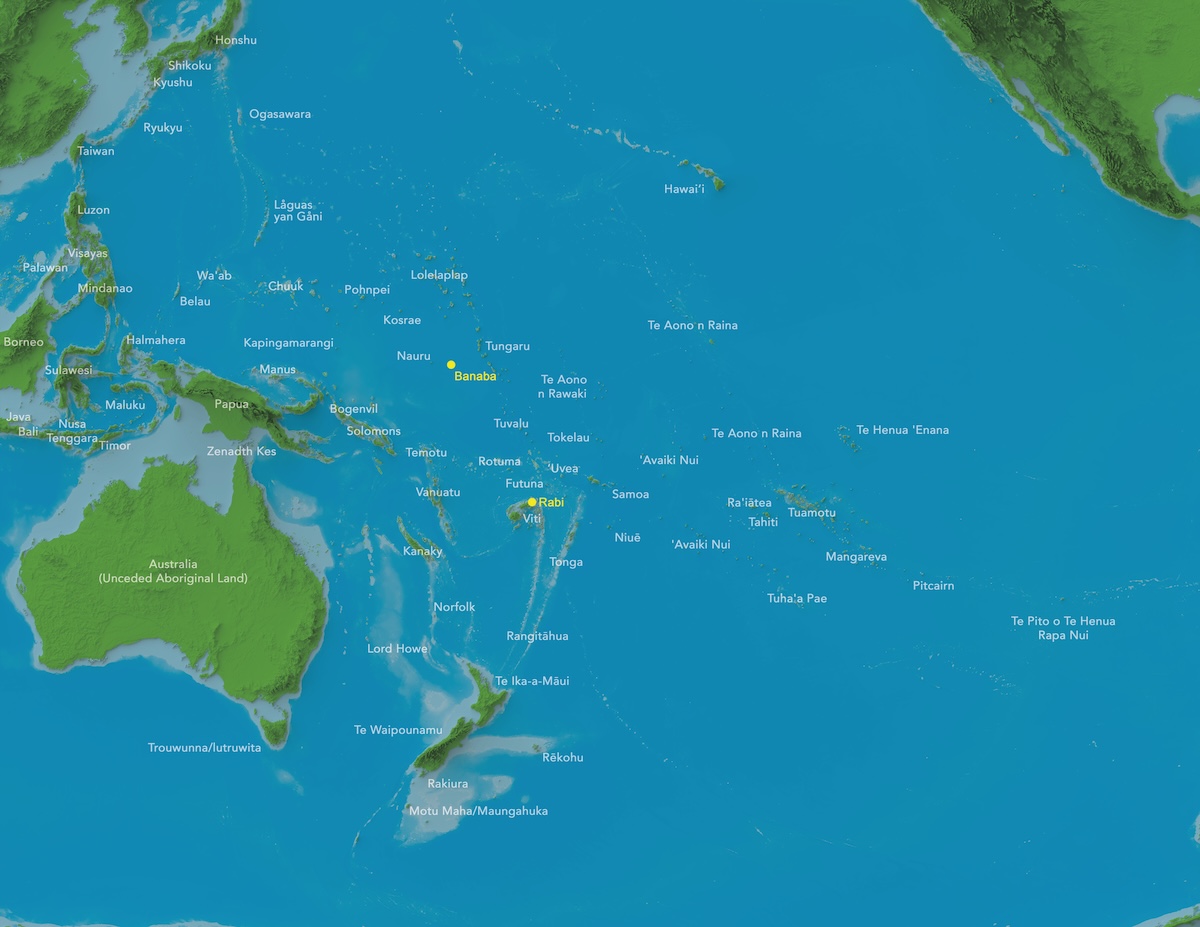
This map, created by Mapmaker David Garcia, for the Justice for Rabi exhibition places Banaba and Rabi in the midst of the seas of islands and ocean states in the Pacific that are connected by generations of movement, struggles, and expansion.
She connected the analysis from Foundations: re:flexing, unpacking power, building solidarity, navigating tensions, with the strategic organising frameworks in Tools: Advocacy Strategy.
“It made sense to establish a group first,” Tauraoi said. “We need to build power first. We need cultural power and people power. Then, we can make change from that solid base.”
The idea for the organisation, Rabi Women Economic Empowerment (RWEE), was taking shape. Shortly after, Tauraoi received a call from the Women’s Fund Fiji and saw an opportunity. In early 2026, she invited the Women’s Fund Fiji (WFF) to host an information session on Rabi. They planned for 30 women. Fifty-nine showed up. On that day, they elected a Board and officially launched.
As of June 2026, Rabi Women Economic Empowerment has more than 100 members.
Importantly, the leaders did not lose sight of what their members needed most. The cost-of-living crisis reached communities as remote as Rabi, and women’s economic agency had to be a pillar of RWEE’s work. The social enterprise component emerged from the practical idea of having a collective marketplace for selling handicrafts and goods. Members pay their quarterly dues with one item RWEE sells on their behalf, and any additional contributions are sold for the member directly.
“It’s not going to be an overnight thing on Rabi, and we have to be strategic. We have to time things right and build up our women, so they can be our leaders when we get the Rabi Council of Leaders back.” Tauraoi said.
The vision for RWEE draws on a tradition of women’s leadership that long predates the 1945 displacement. Banaban women were organising on their own terms long before the British Phosphate Commission forced the move to Rabi. RWEE now has the membership, the enterprise, and the analysis to pursue what comes next: a restored Rabi Council of Leaders, with women in it from the start.
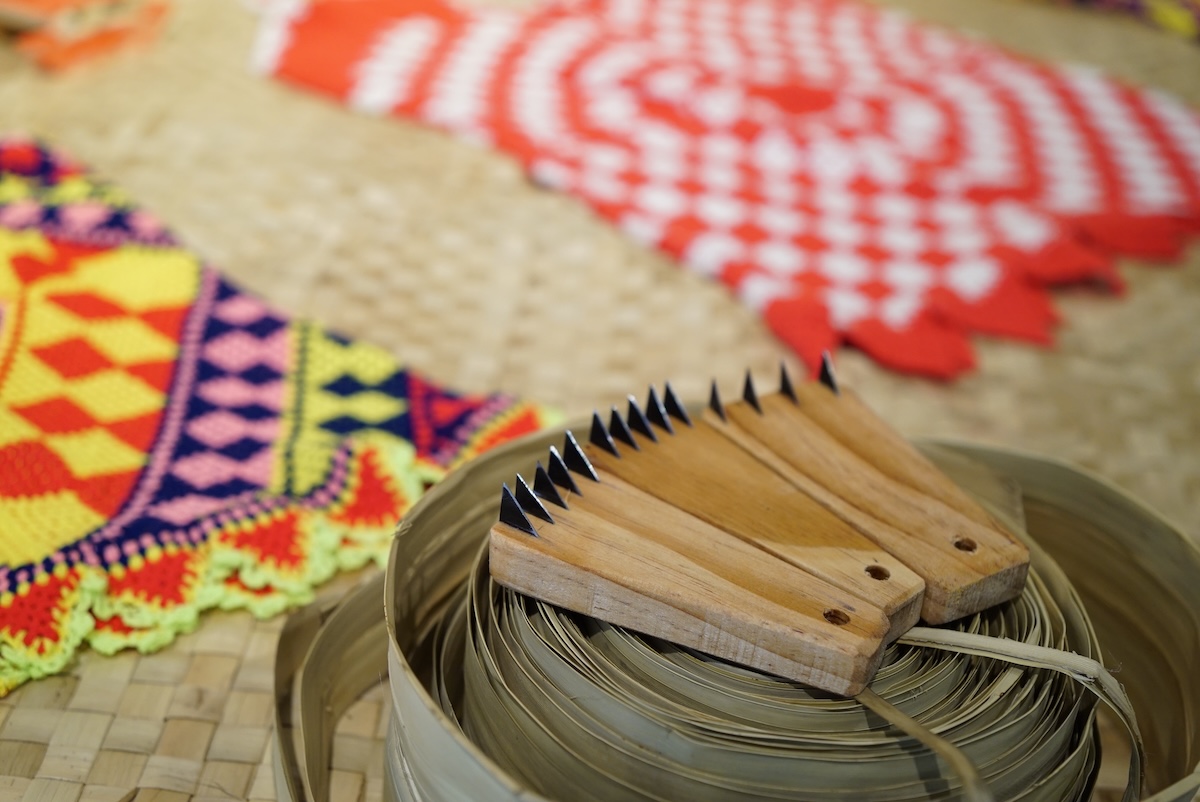
Photograph from the 2023 Justice for Rabi exhibition
Sponsoring a student in ICAAD’s Advocacy Essentials Program is one of the more direct ways to invest in systemic change right now. It means equipping people most impacted by injustice with the tools to transform the very systems they’re up against.
If you know high-impact changemakers in your life who would benefit from support, community, and a space for critical strategic reflection in global fellowship, we’d love to connect them with the program.
Sponsoring is straightforward. If you’d like to gift a course or all four to someone specific, simply donate the cost equivalent with the student’s details in the notes at this link. We’ll sort everything else. If you’d rather we allocate your sponsored seats, donate the same way, and we’ll place them where they’re needed most.