
Their evidence-based approach to minimum wage reform shows what’s possible with strong advocacy skills.
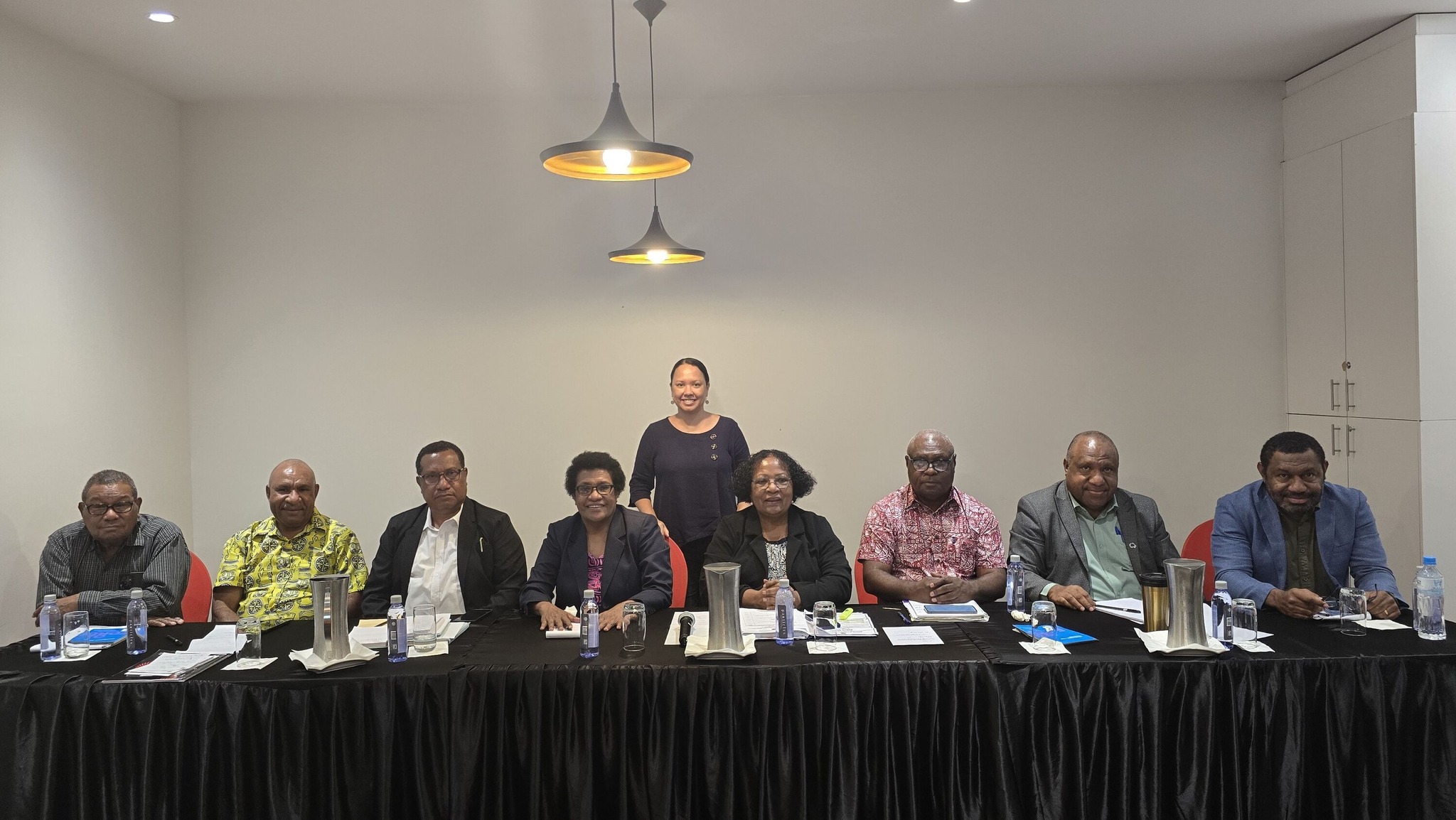
BCFW Executive Director, Evonne Kennedy with the Papua New Guinea Minimum Wage Board
When the Papua New Guinea (PNG) Minimum Wage Board reactivated after 10 years of inaction, the PNG Business Coalition for Women (BCFW) met the moment. Armed with labour market data and fresh training in strategic advocacy from ICAAD’s Advocacy Academy as well as support from their many partners, they were the only organisation to submit evidence-backed recommendations. On January 1st, PNG’s minimum wage will increase by 44%. This is how they helped make it happen.
Starting with the Evidence
BCFW is a member-based organisation led by the private sector. Their focus is gender equity, safety, and empowerment of women and girls in PNG. The work starts from the premise that you can’t improve conditions for women without confronting the systems holding them back. In PNG, this looks like gender-based violence, discrimination, and employment policies that keep inequality in place.
Their method involves identifying problems, gathering evidence, and advocating for change. The 2024 Labour Market Survey is one example, supported and funded by BCFW’s partner, Building Community Engagement in PNG Program, BCEP (supported by the PNG-Australia Partnership). PNG has roughly 6.25 million adults. Of these, only 1.1 million are salaried workers. Just 656,000 work in the formal sector. Among formal workers, 53% earn less than PGK 500 per month, around 348,000 people. That puts them at or near minimum wage. Of those low-wage workers, 127,000 are women.
Training in Strategy
BCFW and ICAAD first connected at the 2025 Pacific regional training on ending workplace sexual harassment. The partnership grew from there. With sponsorship from King & Wood Mallesons, six BCFW team members joined Advocacy Academy courses throughout the year.
GBV Advocacy Officer, Sheena Puayil, noticed a shift in herself. “I was really shy at the beginning. Now I can speak clearly about the issues I care about.”
Communications and Marketing Officer Phyllis Amini valued the global perspective. “It was interesting to hear from participants from around the world. Real impacts and how they were dealing with issues in their own countries. The small group discussions gave me new perspectives.” The Advocacy Academy welcomed participants from 26 different countries in 2025.
The courses also created space for reflection. “Despite what we’re all fighting for, it was really nice to have time to focus on ourselves and our growth,” Phyllis said.
Meeting the Moment
Sheena found the Tools: Advocacy Strategy course particularly useful. Building on other advocacy training BCFW has had with their partners, this course focused on understanding systems advocacy that respond to context and timing, and she and the BCFW team put the learnings to work right away.
PNG’s minimum wage had sat at PGK 3.50 per hour for over a decade. The lowest in the region. Inflation between 2016 and 2023 eroded its value by more than 30%. Full-time workers were earning PGK 560 per month, far below what’s needed to cover basic costs.
When the Minimum Wage Board reactivated after 10 years, the team from BCFW, with support from BCEP, saw an opening. They started mapping the landscape. Labour Minister, Hon. Kessy Sawang was leading the efforts to make a change. BCFW built relationships with policy makers to best determine how to support an increase to the minimum wage. Who were the decision-makers? What evidence would matter to them? What was the timeline?
The team, through supportive policy makers and partners, learned the board was open to an increase, but they needed evidence. Using their labour market survey data and technical and capacity building support from their partners, BCFW was well-positioned to develop and make their case.
On January 1st, PNG’s new minimum wage of PGK 5.00 per hour will take effect — a 44% increase.
“Before these courses, I might have missed these moments,” Sheena said. “Even if we found the right people, we wouldn’t have known how to be strategic about what to present to them.”
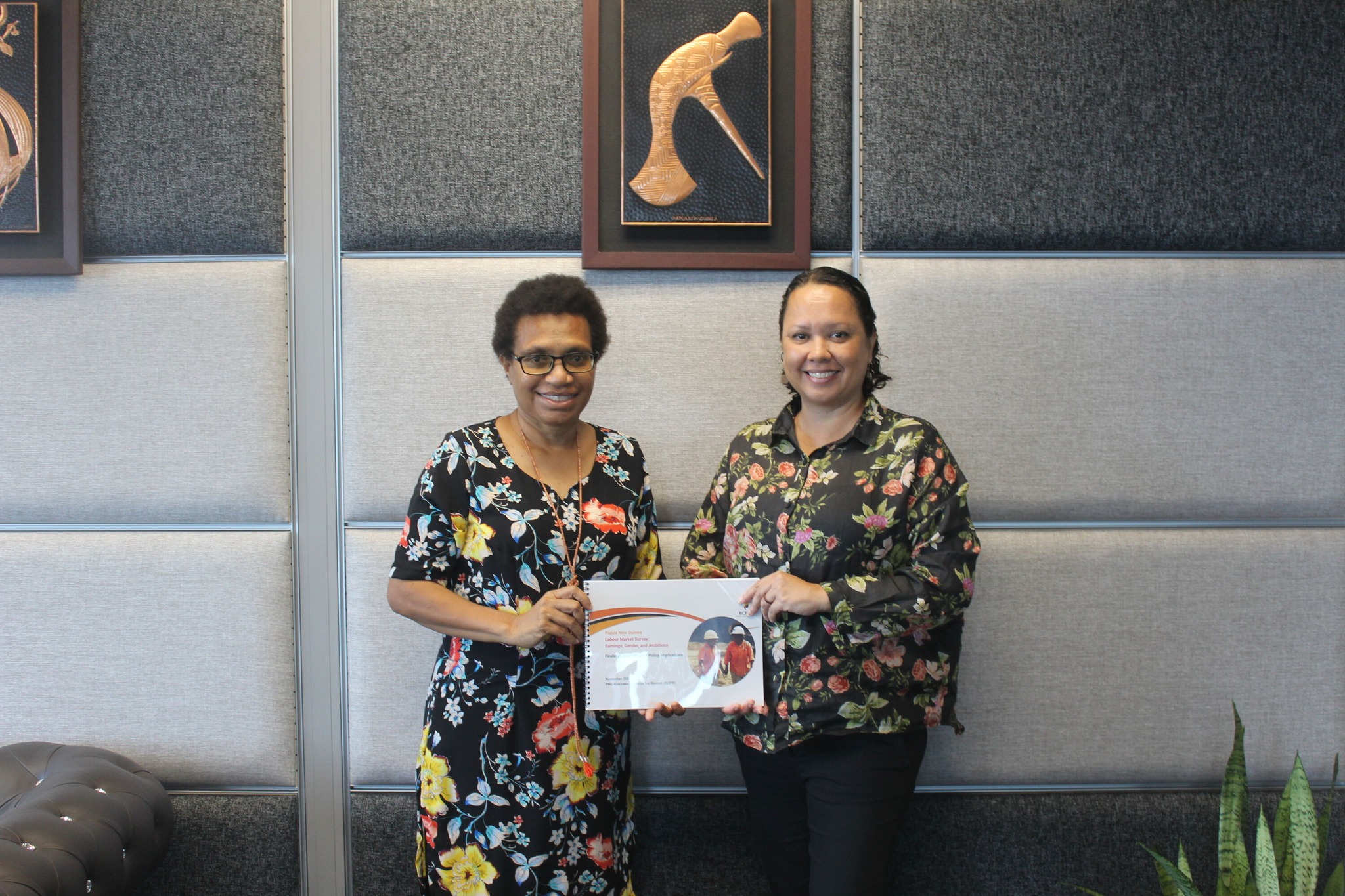
Minister for Labour, Kessy Sawang and BCFW Executive Director, Evonne Kennedy
What’s Next
The minimum wage increase is a start. BCFW is pushing for regular reviews and planned increases tied to economic conditions.
In 2026, BCFW and ICAAD will also continue work on two fronts: advocating for reform of the Employment Act, particularly on sexual harassment provisions, and advancing access to justice through the TrackGBV program, which empowers judiciaries as critical actors in addressing gender-based violence.
BCFW shows what’s possible when private sector leadership, strategic advocacy, and evidence-based research come together. In a context where formal employment is limited and wage inequality is entrenched, their approach offers a model grounded in data, driven by strategy, and responsive to the realities of women workers in PNG.
Supporting BCFW means investing in a skilled advocacy strategy and a passionate team of advocates that live and breathe intersectionality.