
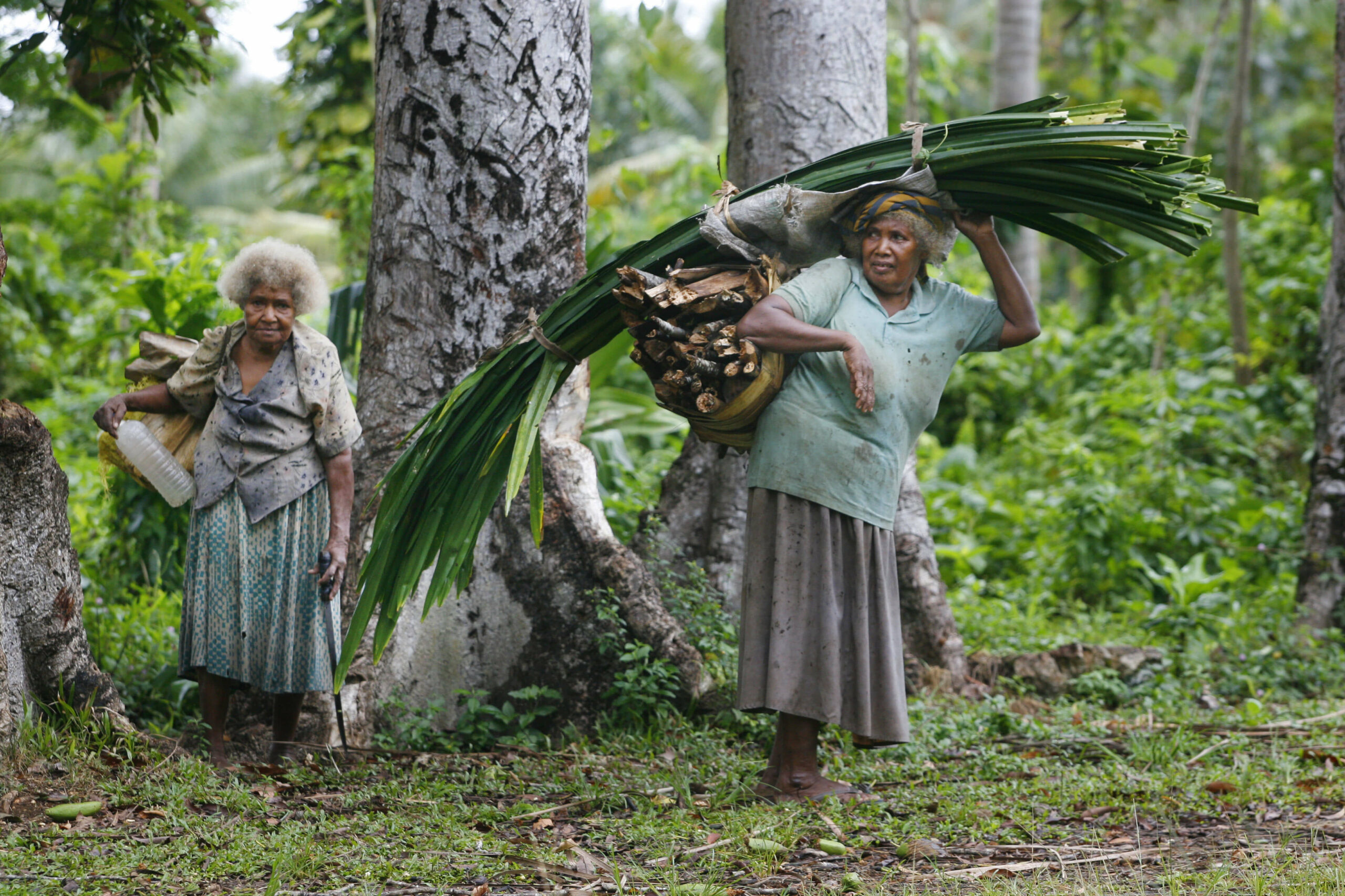
Photo by Rob Maccoll, licensed under the Creative Commons Attribution 2.0 Generic license.
In May, the Solomon Islands will be up for their Universal Periodic Review before the UN Human Rights Council. ICAAD and our partners in the Solomon Islands, Apunepara Ha’amwa’ora Natural Resources Association (AHRNA) and the Development Services Exchange (DSE), have submitted a joint report outlining two major areas of concern: business and human rights with the extractives industry and access to justice and gender-based violence.
Business and Human Rights
The current Mines and Minerals Act does not require Free, Prior and Informed Consent (FPIC). Without FPIC in the law, there’s no obligation for companies to get genuine agreement from the communities whose land they’re using. The government knows this, and the attempted fast-tracking of a new bill is an admission that the current framework doesn’t work.
Further, foreign investor policy and regulations offer little safeguarding. The Foreign Investment Unit makes decisions on foreign investor applications, and there is little transparency or accountability around how approvals are made. The Mineral Board accepts approvals from the Unit to process mining license applications resulting in a broken link in human rights protections.
In the Solomon Islands, communities are paying for the shortcomings in the regulatory framework. DSE surveyed traditional landowners across three provinces, and over half reported either negative economic impacts or no economic impact at all. In addition to the economic and environmental damage, there is still no independent grievance mechanism for communities harmed by mining and logging activities. Licenses continue to be issued under the same broken system.
Explore more survey results and information in the Toolkit on Mining and Community Power in the Solomon Islands.
We’re recommending an immediate moratorium on new mining licenses until the law is brought into line with international human rights standards. FPIC needs to be a binding requirement in any new legislation, covering all customary land-owning groups, before any prospecting or mining license is issued.
Access to Justice and Gender-based Violence
Analysis of High Court sentencing decisions from 2015 to 2025 found that judges applied gender discrimination in more than half of gender-based violence cases.
Despite the Family Protection Act 2014 clarifying that compensation is not a defence for domestic violence, reconciliation continues to be used as a mitigating factor in sentencing. It’s being applied in sexual violence cases involving children. In R v Gaugela [2022], a judge suspended the full sentence of a man who raped a 13-year-old girl, citing reconciliation and describing the child as a “willing participant.” The Penal Code Amendment Act 2016 is explicit that children cannot consent, but harmful rape myth and gender stereotypes persist in the courts.
The “sole breadwinner” argument was used to reduce sentences in 37.5% of domestic violence cases, meaning perpetrators earned mitigating credit for providing for the very families they were abusing.
Explore the data on the TrackGBV Dashboard.
The Sentencing Act needs to explicitly prohibit these factors. Gender stereotypes, customary reconciliation, and compensation should not be available as mitigating factors in gender-based violence cases. This is particularly important noting how few cases make it into the court system. Particularly for domestic violence cases, mediation is often ordered by first responders, formally and informally, preventing cases from being taken further.
Another gap is the lack of sexual harassment legislation. Solomon Islands still hasn’t acted on Cycle 3 Recommendation to criminalise sexual harassment. While there are limited provisions for women in the public service, women in the private and informal sectors have no legal protection at all. The Labour Act needs to be amended to fill that gap.
Read the full submission below.